Electric vehicle charging is becoming a visible business asset, not merely a utility expense. The International Energy Agency reported that global electric car sales exceeded 17 million in 2024. That growth is changing what drivers expect at retail parks, hotels, offices, and fuel stations. They want reliable charging, clear prices, and immediate confirmation that a session has started.
So, how does digital display charging benefit businesses? A bright screen can show charger availability, energy delivered, pricing, estimated completion time, and payment instructions. It can also guide drivers toward cafés, restrooms, or store entrances. At a supermarket, this creates a practical moment for product offers while customers wait beside their vehicles. At a hotel, the display can reinforce convenience and brand trust. McKinsey research indicates that charging infrastructure will require substantial global investment as EV adoption expands, making operational efficiency increasingly important.
Fatih Birol, Executive Director of the IEA, said, “The electric car revolution is unstoppable.” Digital displays can help businesses respond to that shift with measurable information. Operators can monitor sessions, identify equipment problems, and test targeted promotions. The benefits are real, but not automatic. A confusing interface, hidden fees, or a broken screen can damage confidence faster than a printed sign. That uncomfortable detail matters. Businesses should measure uptime, customer satisfaction, conversion rates, and revenue per charging session. The strongest strategy combines useful information with restrained advertising. More screens do not always create more value. Better decisions do.
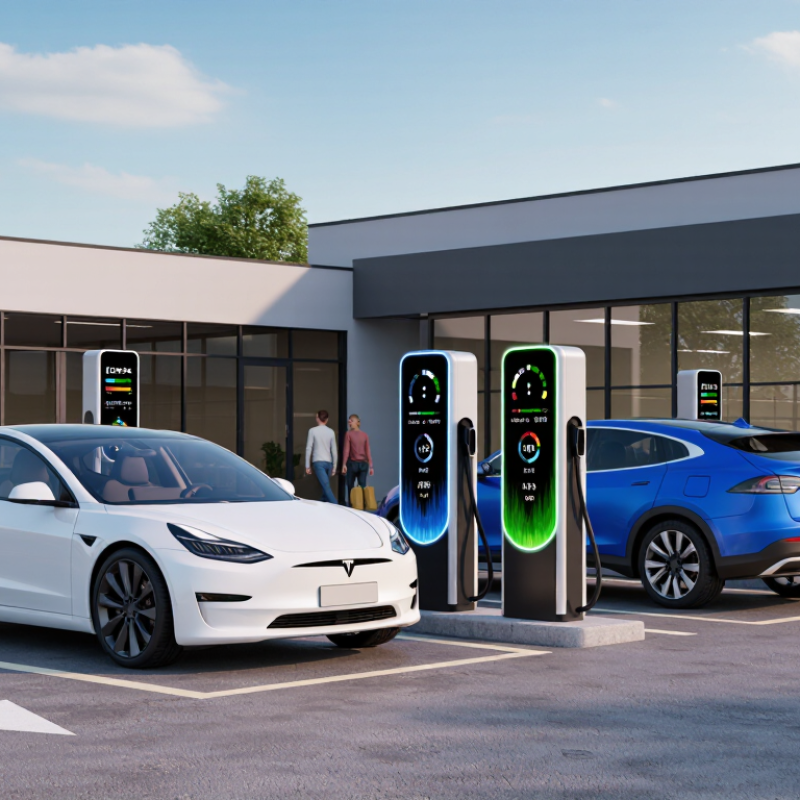
Digital display charging combines a charging station with a visible screen. The display shows energy delivered, charging time, price, and current status. Users can usually start a session by scanning a code, tapping a payment method, or using an approved account. Behind the screen, the charger connects with a payment system and management platform. The platform checks access, records electricity use, and sends session data to the business dashboard.
For businesses, clear information can reduce customer questions and support smoother site operations. A retail location might display available ports, estimated costs, and completion messages near its entrance. Staff can review usage patterns, identify faults, and schedule maintenance before equipment becomes unusable. Accurate pricing matters. Even a small display error can damage trust and create avoidable disputes. In real installations, network interruptions still happen, so offline procedures and readable error messages deserve attention.
Tips: Place screens at eye level and protect them from glare, rain, and vandalism. Show simple instructions, estimated costs, and a visible support contact. Test the full payment journey during busy periods, not only in ideal conditions. Keep software updated and limit access to authorized staff. Do not collect more user information than necessary. A pilot period can reveal confusing wording or slow payment steps. Some assumptions will be wrong, and customer feedback may expose them quickly.
Digital display chargers give businesses more than a power connection. They turn waiting time into a visible customer touchpoint. A bright screen can show charging status, directions, store offers, safety guidance, or local information. This supports clearer communication near entrances, parking areas, and reception zones.
Demand is becoming harder to ignore. The International Energy Agency reported that global public charging points exceeded four million in 2023, with installations rising by about 40%. More chargers create more competition for attention. A digital display helps a site explain its value within seconds. It can also support usage monitoring, promotional campaigns, and better queue management. The global digital signage market was valued at approximately $27.1 billion in 2023, according to Grand View Research. That growth reflects wider business interest in screen-based communication.
Visibility matters. Businesses may gain longer dwell times when visitors wait beside a charger. Retailers, hotels, offices, and property managers can use this time carefully. However, the benefit is not automatic. Poorly placed screens can create visual clutter, glare, or privacy concerns. Content must remain useful, readable, and updated. The U.S. Department of Energy recommends clear charging information, including connector status and availability, to reduce user confusion. In practice, some installations still focus too heavily on advertising. That is a weakness worth reviewing. A charger should serve the customer before serving the campaign.
Retail stores and shopping centres benefit when charging stations keep visitors nearby. A digital display can show charging status, directions, or timely store information. Shoppers may wait beside the unit while comparing products or checking messages. Clear pricing and privacy notices also build trust.
Hotels, cafés, and restaurants can place charging units near seating areas. Guests gain practical value during meals, meetings, or delayed check-ins. Staff can monitor usage through station records and identify busy periods.
In my experience, placement matters more than decoration. A unit hidden behind furniture rarely earns attention.
Airports, clinics, universities, and office buildings have different needs. Travellers value quick access near gates, while patients may need simple, touch-free instructions. Students often use shared spaces for longer periods. Offices can support visitors without asking reception teams for spare cables. However, bright screens may distract people, and maintenance costs are easy to underestimate.
Keep it simple. Choose readable text, strong accessibility features, and secure cable connections. Managers should test the station during peak hours, measure actual usage, and revise the display content when it fails to help.
Choosing the right digital display charging solution starts with real operating data, not attractive screens. The IEA’s Global EV Outlook 2024 reported more than 14 million electric cars sold worldwide in 2023. Demand is growing, but every site behaves differently. A workplace needs predictable morning charging. A hotel may need simple payment and clear availability. A retail site needs fast status updates during short visits.
Review vehicle dwell time, electrical capacity, traffic patterns, and accessibility before buying equipment. Displays should show charging status, pricing, estimated completion, and fault messages in plain language. The U.S. Department of Energy’s Alternative Fuels Data Center highlights network connectivity, maintenance, and interoperability as important station considerations. Track uptime, session success, average dwell time, and support requests. A beautiful display is still a poor investment if the charger often fails. That happens.
Tips: Test one location first. Ask drivers to use it. Measure confusion, queue length, and screen readability in sunlight. Keep payment and emergency instructions visible. Choose open communication standards where possible, and confirm software support terms before installation. Do not collect more user data than necessary.
Implementation should include a site survey, load-management plan, signage review, and staff training. Energy use also matters. The IEA notes that smart charging can help manage grid demand by shifting charging to suitable periods. Yet forecasts can be wrong. Leave room for extra capacity, but avoid paying for unused power today. Review performance monthly, then adjust pricing, display content, and maintenance schedules based on evidence.
| Charging Solution | Best-Fit Business Locations | Typical Electrical Output | Digital Display Functions | Primary Business Benefits | Key Selection Criteria | Implementation Priorities |
|---|---|---|---|---|---|---|
| AC Workplace Charging | Office campuses, employee parking areas, and long-stay commercial properties | Approximately 3.7–22 kW per charging point, depending on the electrical supply and charger configuration | Displays charging status, estimated completion time, energy delivered, access instructions, and pricing information | Supports employee retention, workplace sustainability programs, and predictable daytime charging | Available electrical capacity, expected daily parking duration, user access controls, load-management capability, and future expansion space | Conduct a site load assessment, define employee or visitor charging policies, install network connectivity, and phase deployment according to parking demand |
| AC Destination Charging | Hotels, shopping centers, restaurants, leisure facilities, and private parking operators | Approximately 7–22 kW per charging point | Shows charger availability, charging instructions, session information, site messages, and optional promotional content | Increases customer dwell time, improves the visitor experience, and helps differentiate a property without requiring high-power equipment | Average customer stay, parking turnover, visibility from vehicle approaches, weather protection, payment requirements, and signage regulations | Place displays where drivers can read them safely, connect the charging system to the property network, and coordinate pricing with parking rules |
| DC Fast Charging | Highway service areas, fleet depots, urban charging hubs, and high-turnover retail sites | Approximately 50–350 kW per charging point; actual vehicle charging speed depends on the vehicle and battery conditions | Displays live power delivery, charging progress, estimated time remaining, pricing, connector status, and fault messages | Reduces charging waiting time, supports higher vehicle turnover, and provides clear information during time-sensitive charging sessions | Utility connection capacity, transformer requirements, peak demand costs, connector compatibility, cooling requirements, uptime monitoring, and traffic flow | Complete utility and civil-engineering studies, plan queue management, provide accessible cable positioning, and establish remote fault monitoring before launch |
| Fleet Depot Charging | Delivery fleets, service vehicles, municipal fleets, logistics centers, and bus depots | Commonly 7–22 kW AC for overnight charging and 50 kW or higher DC for rapid turnaround operations | Displays vehicle assignment, charging priority, energy use, scheduled departure time, charging faults, and operational alerts | Improves fleet readiness, supports energy-cost control, and helps managers coordinate charging around operating schedules | Fleet duty cycles, departure windows, vehicle battery sizes, depot dwell time, route requirements, software integration, and electrical capacity | Map vehicle schedules first, introduce smart charging, reserve power for critical departures, and integrate charger data with fleet-management systems |
| Solar-Integrated Charging | Retail parks, corporate sites, campuses, and properties with suitable rooftop or carport solar potential | Charging output varies by the charger type; solar generation is variable and may require grid support or stationary storage | Shows renewable energy contribution, current solar generation, grid energy use, battery state of charge, and charging availability | Improves energy transparency, supports renewable-energy communication, and can reduce dependence on grid electricity during solar production periods | Solar capacity, shading, roof or canopy structure, battery storage, local interconnection rules, energy-management controls, and seasonal generation | Model annual energy production, separate renewable claims from total electricity consumption, and configure controls for safe grid interaction |
| Public Payment-Enabled Charging | Public car parks, mixed-use developments, retail destinations, and transport-oriented locations | May use AC or DC equipment; output should match expected dwell time and local grid limitations | Displays price per energy unit or time period, session status, payment instructions, receipts or confirmation messages, and customer-support details | Creates a clear user journey, reduces payment confusion, and supports transparent revenue management | Local payment rules, contactless payment availability, pricing structure, accessibility, network reliability, customer support, and data privacy | Publish pricing before a session starts, test payment recovery procedures, provide a non-digital support route, and monitor failed transactions |
| Advertising-Supported Charging Display | Retail centers, hospitality venues, transport hubs, and other locations with high pedestrian or vehicle visibility | Charging output can be AC or DC; the display is an additional communication layer rather than a substitute for charging capacity | Rotates charging instructions, safety notices, local information, sustainability messages, and paid or in-house advertising | Creates an additional communication channel and may support advertising revenue or cross-promotion while customers charge | Screen brightness, viewing distance, content approval, accessibility, privacy, weather resistance, remote content management, and local advertising rules | Prioritize safety and charging information, set content frequency limits, schedule updates remotely, and measure engagement without collecting unnecessary personal data |
| Accessible and Wayfinding-Focused Charging | Large parking facilities, hospitals, campuses, airports, and multi-level car parks | May use AC or DC equipment selected according to site traffic and electrical availability | Provides bay identification, directional guidance, connector information, accessibility notices, availability status, and error instructions | Reduces search time, improves site navigation, and helps customers identify suitable charging spaces more easily | Text size, contrast, viewing angle, multilingual support, accessible bay dimensions, pedestrian routes, lighting, and location accuracy | Combine digital displays with permanent signs and road markings, test routes with different users, and keep accessibility information current |
In 2026, charging displays will become operational tools, not simple screens. Businesses will use them to show connector status, estimated charging time, prices, and parking rules. Field experience suggests clear information reduces driver confusion and unnecessary staff calls. A bright, readable display matters at night, during rain, and under direct sunlight. Small details matter.
Artificial intelligence will support demand forecasting and energy scheduling. Displays may recommend slower charging during expensive grid periods, then explain the choice in plain language. Dynamic messages can guide drivers toward available bays and reduce queue pressure. However, predictions can be wrong. Operators should show timestamps, confidence limits, and a manual override. Trust disappears when a screen promises ten minutes but delivers twenty-five.
Interoperability will shape deployment in 2026. Open communication protocols can connect chargers, payment systems, building energy controls, and accessibility services. Digital displays will also need stronger privacy and cybersecurity practices. They should minimize personal data, encrypt transmissions, and receive documented security updates. Accessibility will move beyond larger text. Voice guidance, high-contrast layouts, multiple languages, and tactile controls can serve more drivers. Businesses should test these features with real users, not assume laboratory results reflect a busy parking site. The business case remains imperfect: hardware upgrades cost money, and some screens may create visual clutter. Careful pilots, maintenance logs, and honest performance reviews will show whether the display improves charging or merely adds another surface.
It combines an electric charger with a visible screen. The screen shows energy, time, price, and session status.
Users can scan a code, tap a payment method, or use an approved account. The system then checks access.
Show available ports, estimated cost, charging progress, and completion messages. Keep the wording short and easy to read.
They turn waiting time into a useful customer interaction. A store, hotel, or office can share directions or local information.
Place it near eye level, close to the parking space or entrance. Avoid strong glare, heavy rain, and blocked views.
The charger should provide clear error messages and an offline procedure. Network failures still happen.
Staff can review usage, find faults, and schedule maintenance early. Software updates and access controls also matter.
Collect only the information needed for access and payment. Limit system access to authorized staff.
Yes, especially during busy periods. Test payment, instructions, pricing, and completion messages.
Some screens show too many advertisements and too little charging information. Customer service should come first.
Digital display charging combines power delivery with a clear screen that shows useful information such as charging status, energy use, availability, pricing, or service instructions. Instead of functioning as a hidden utility, the charger becomes an interactive communication point. This makes it easier for users to understand the charging process while helping operators monitor performance and manage resources more efficiently.
The key question is how does digital display charging benefit businesses? It can improve customer experience, support clearer payment and usage communication, create opportunities for on-site promotions, and provide operational data for better planning. Retail stores, offices, hotels, apartments, transport hubs, and public facilities may benefit most from this technology. Businesses should evaluate power requirements, display visibility, software compatibility, maintenance needs, accessibility, and installation costs before choosing a solution. In 2026, advances in connectivity, smart energy management, remote monitoring, personalization, and sustainable design are expected to make digital display charging more flexible, measurable, and valuable across different commercial environments.

Orange Energy