Top 10 Benefits of Lamp Post Charging Stations for Your City?

Time:2026-03-30 Author:Isabella
0%

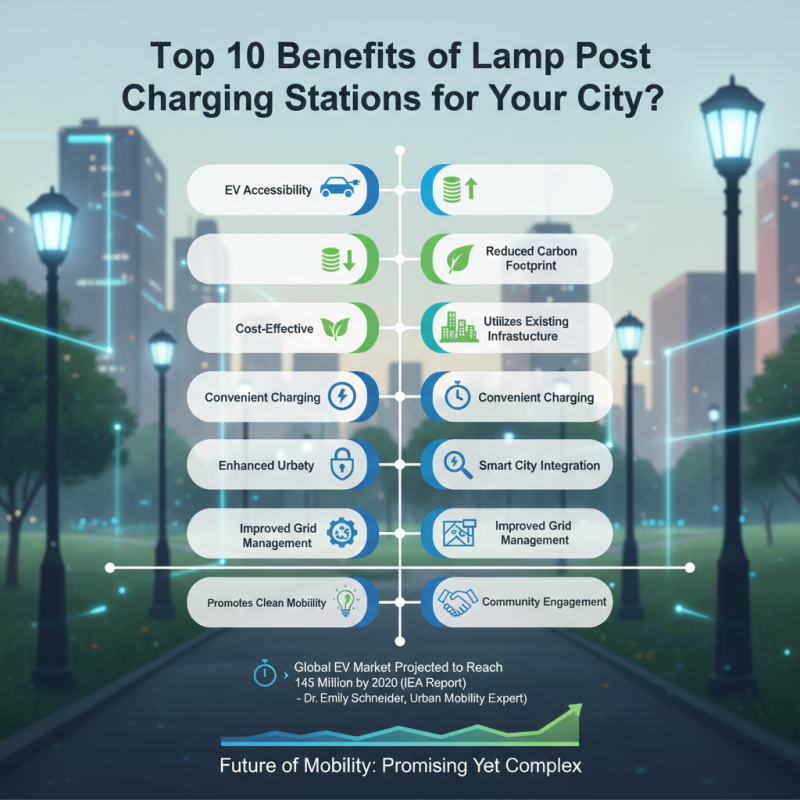
Cities around the world are rapidly embracing the innovation of Lamp Post Charging Stations. These installations transform ordinary street lamps into vital charging points for electric vehicles. According to a report by the International Energy Agency, the global electric vehicle market is projected to reach 145 million by 2030. This shift necessitates expanded charging infrastructure, and lamp post stations meet this demand effectively.

Dr. Emily Schneider, a leading expert in urban mobility, states, “Lamp Post Charging Stations can enhance urban environments by making charging accessible and convenient.” This highlights their importance in promoting electric vehicle use. Cities can leverage existing infrastructure to save costs and reduce their carbon footprint.

Despite these evident advantages, cities face challenges in implementation. The integration of Lamp Post Charging Stations requires careful planning and investment. Some urban areas struggle with the balance between aesthetics and functionality. Stakeholder engagement is crucial to address community concerns. As cities explore the future of mobility, the potential of Lamp Post Charging Stations remains promising yet complex.
Top 10 Benefits of Lamp Post Charging Stations for Your City?

Advantages of Lamp Post Charging Stations for Urban Mobility

Lamp post charging stations are revolutionizing urban mobility. These installations transform ordinary street lights into electric vehicle (EV) charging points. As cities continue to grow, the demand for accessible charging solutions rises. Lamp post chargers are often located in convenient spots, making them easy to use for residents and visitors.

Many cities lack adequate charging infrastructure. Lamp post stations provide a quick solution to this issue. They can be installed in various neighborhoods, allowing for dense coverage. This encourages more people to consider switching to EVs. Moreover, they utilize existing city infrastructure, minimizing construction disruption and costs. As a result, planning officials appreciate their efficiency.

However, there are challenges. Not all lamp posts can support the equipment necessary for charging. Cities need to assess their current light fixtures. Some may not have the power capacity for additional usage. Additionally, ongoing maintenance and accessibility can pose problems. Yet, the potential benefits of enhancing urban mobility remain significant. Local governments must weigh these factors carefully.

Enhanced Accessibility for Electric Vehicle Users

Electric vehicle (EV) adoption is rapidly growing, and so is the need for accessible charging infrastructure. Lamp post charging stations offer a unique solution to this challenge. They blend seamlessly into urban environments, converting underutilized assets into valuable charging points. A report from the International Energy Agency indicates that charging availability directly influences EV adoption rates. More charge points lead to higher consumer confidence and increased usage.

Accessibility is key for EV users. Many people live in apartments or rural areas without dedicated parking. Lamp post chargers bring power to the streets, enabling easy access for those parked nearby. The U.S. Department of Energy states that about 80% of EV charging occurs at home, but for many, this isn't feasible. Therefore, public charging options become essential for broader acceptance.

Moreover, integrating charging stations into existing infrastructure reduces costs. Cities can leverage current lamp posts, avoiding the expenses of building standalone charging stations. However, implementing this requires careful planning and community input. An article from Smart Cities Dive highlights that urban planning must focus on inclusive designs to serve diverse populations. Cities should evaluate the use of these stations continually, ensuring they meet the needs of all residents.

Improved Urban Aesthetics and Infrastructure Integration

As cities evolve, integrating lamp post charging stations proves beneficial for urban aesthetics and infrastructure. These installations bring a modern touch to street lighting. They replace outdated poles with sleek designs that blend seamlessly into the urban landscape. Picture a row of energy-efficient lights, each offering a charging point for electric vehicles. This innovation enhances visual appeal while promoting sustainability.

The strategic placement of charging stations can reduce clutter. By utilizing existing infrastructure, cities avoid the need for additional structures. This approach minimizes disruptions during installation. However, there are challenges. Maintenance of these dual-function poles requires planning and resources. Not every city may be equipped to handle this. Additionally, design choices must consider both aesthetics and functionality.

Enhancing urban aesthetics is about more than looks. It's about creating spaces that foster community and encourage green practices. Combining form and function increases usability. Vibrant streets with charging stations can attract pedestrians and businesses. Local governments must weigh these benefits against potential drawbacks in implementation, ensuring that aesthetics do not compromise practicality.

Cost-Effective Solutions for Expanding Charging Networks

As cities strive to expand their electric vehicle (EV) charging networks, lamp post charging stations emerge as cost-effective solutions. These installations leverage existing infrastructure, minimizing the need for extensive rewiring. By converting regular lamp posts into charging points, cities can save on materials and labor costs. This approach allows local governments to allocate funds to other essential services.

The implementation of lamp post charging stations can also enhance accessibility. They can be strategically placed in various neighborhoods, ensuring that charging is available to all residents. Though there are challenges, such as ensuring adequate power supply and managing usage, the benefits often outweigh these hurdles. Cities must consider the positioning of charging points, taking into account power demand and the local EV population.

Community engagement plays a critical role in this process. Citizens should be involved in decisions regarding locations and usage policies. Feedback can highlight potential issues, like congestion at popular charging spots. By listening to the community, cities can make informed adjustments. This creates a more resilient and user-friendly charging network. Balancing cost, accessibility, and community needs will require ongoing reflection and adaptation.

Top 10 Benefits of Lamp Post Charging Stations for Your City

Benefit Description Cost Savings Installation Time
Increased Accessibility Easier access to charging stations for EV owners throughout the city. Reduced need for dedicated charging infrastructure. 2-3 days
Space Efficiency Utilizes existing lamp posts, reducing the footprint of charging stations. Lower land and installation costs. 1 day
Aesthetic Integration Enhances urban design while providing functionality. Minimal visual impact compared to standalone chargers. 1-2 days
Energy Management Smart grid technology helps manage energy demand effectively. Lower utility costs during off-peak hours. Varies
Promotion of Electric Vehicles Encourages more residents to transition to electric vehicles. Potential reduction in gasoline tax revenue. Varies
Revenue Generation Potential fees for charging could generate additional city revenue. Long-term financial benefit. N/A
Enhanced Safety Lighting from lamp posts enhances visibility in charging areas. Potential reduction in accidents and incidents. N/A
Environmental Benefits Support for renewable energy integration into charging stations. Long-term savings on fossil fuel consumption. Ongoing
Community Engagement Fosters local pride and involvement in clean energy initiatives. Potential cost reduction through community support. Ongoing
Flexibility in Deployment Easily adaptable to changing urban landscapes and demand. Lower long-term adaptation costs. 2-3 days

Promotion of Sustainable Energy Practices in City Planning

As cities evolve, promoting sustainable energy practices is crucial. Lamp post charging stations offer an innovative way to support electric vehicles. They blend into urban environments seamlessly. This helps reduce the visual clutter commonly found with charging stations. More importantly, such installations encourage the use of electric vehicles.

Integrating these stations into urban planning can decrease greenhouse gas emissions. Cities can show commitment to green energy and sustainability. Additionally, accessibility improves as more drivers can charge their vehicles. This poses a challenge, though. It’s necessary to ensure that installations do not obstruct sidewalks or public spaces.

Tips for cities considering lamp post charging stations include conducting thorough evaluations. Survey community needs and preferences before installation. Engage local stakeholders for input. Remember, charging stations should prioritize user convenience. Monitor the usage and maintenance of the stations regularly, as neglect could lead to underutilization. Implementing these strategies thoughtfully can help cities transition towards a more sustainable future.

FAQS

: What are lamp post charging stations?

: They are charging points integrated into street lamp posts for electric vehicles.

How do lamp post charging stations benefit urban aesthetics?

They replace outdated poles with sleek designs, enhancing visual appeal while promoting sustainability.

What infrastructure challenges exist with lamp post charging stations?

Maintenance requires resources and planning, and not all cities may manage these effectively.

How can cities save money by using lamp post charging stations?

They utilize existing infrastructure, reducing the need for rewiring, materials, and labor costs.

Why is community engagement important in installing charging stations?

Feedback from residents helps identify issues like congestion, allowing for informed adjustments to the network.

What should cities consider before installing charging stations?

Conduct thorough evaluations, survey community needs, and engage local stakeholders for input.

How do lamp post charging stations improve accessibility?

They can be placed in various neighborhoods, ensuring charging availability for all residents.

What are some potential drawbacks of lamp post charging stations?

They could obstruct sidewalks or public spaces, impacting usability. Regular monitoring is necessary.

How can cities promote sustainable practices with charging stations?

By integrating them into urban planning, cities can decrease greenhouse gas emissions and support electric vehicle use.

What factors can affect the successful implementation of charging stations?

Power demand, careful positioning, and balancing community needs are essential for effective deployment.

Conclusion

Lamp Post Charging Stations offer numerous advantages that can significantly enhance urban mobility in cities. These stations not only improve accessibility for electric vehicle users but also seamlessly integrate into the existing urban infrastructure, contributing to better city aesthetics. By utilizing existing lamp post structures, cities can expand their charging networks in a cost-effective manner, promoting the adoption of electric vehicles while minimizing the financial burden on local governments.

Moreover, Lamp Post Charging Stations play a crucial role in encouraging sustainable energy practices within city planning. As municipalities prioritize greener initiatives, these charging stations support the transition toward an environmentally friendly transportation system. Overall, the implementation of Lamp Post Charging Stations represents a strategic move toward a more sustainable and accessible urban environment.

Isabella

Isabella

Isabella is a dedicated marketing professional with a sharp focus on driving brand growth and engagement through strategic content creation. With an extensive background in digital marketing, she combines her passion for storytelling with her keen understanding of industry trends to deliver......