What Are China's Top EV Charging Trends Shaping the Future?

Time:2026-10-31 Author:Oliver
0%

China’s EV charging story is moving beyond adding more plugs. The sharper question is what trends are shaping the future of ev charging infrastructure across a country with dense cities, long-distance highways, and very different local needs. Drivers may encounter a high-power charger beside a highway service area, a shared station in an apartment district, or a battery-swapping site near a fleet depot. Each solves a different problem. None works everywhere.

IEA Executive Director Fatih Birol has described the wider shift with a concise line: “The future of the car is electric.” That direction puts practical pressure on charging networks. China’s emerging priorities include faster charging, smarter load management, battery swapping for suitable vehicles, and closer links between chargers and renewable power. Digital tools can help drivers find working stations and help operators manage busy periods. Yet a faster plug is not automatically a better system. Grid capacity, maintenance, clear pricing, and access beyond major cities matter just as much. Small details matter.

This outline examines how these trends may reshape China’s EV ecosystem, from urban curbside charging to highway corridors. It also considers the trade-offs: ultra-fast charging can shorten stops, but may demand costly grid upgrades. Battery swapping can reduce downtime for some fleets, but depends on compatible vehicles and station economics. Progress is real, but uneven. That tension deserves attention, not a victory lap. The future will depend less on headline charger counts than on reliable service, thoughtful planning, and infrastructure that fits how people actually travel.
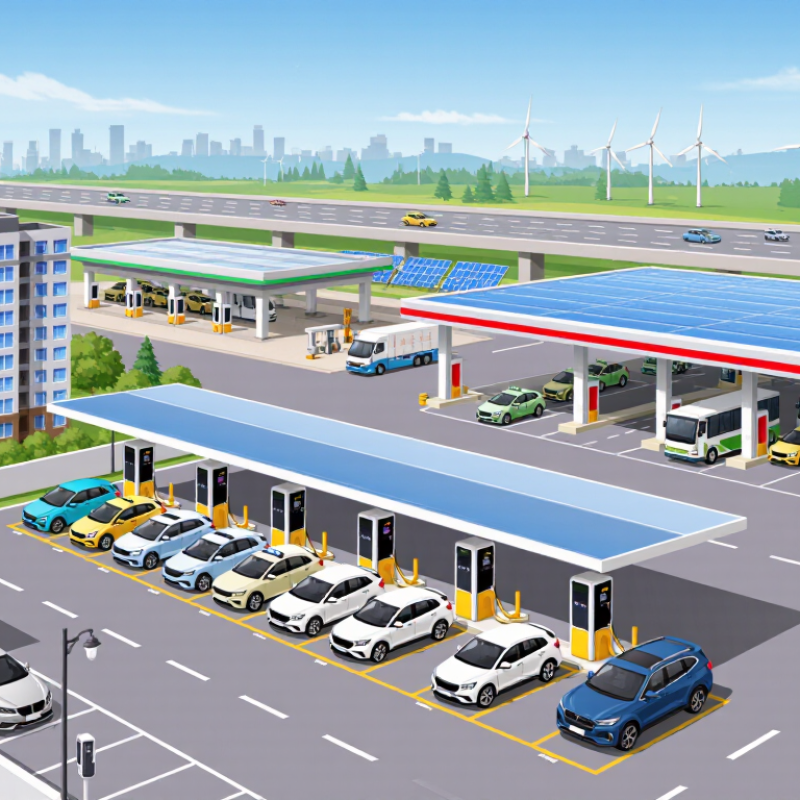
What Are China's Top EV Charging Trends Shaping the Future?

Overview of China’s EV Charging Market and Its Key Drivers

China’s EV charging market has moved beyond pilot projects into everyday infrastructure. At the end of 2024, the country had about 12.82 million charging points, according to the National Energy Administration. This total includes public and private equipment, with home chargers forming the larger share. Rapid EV adoption, dense cities, and sustained infrastructure investment are key drivers. A charger is now part of the parking routine, not a novelty.

Public networks are expanding too. The International Energy Agency’s Global EV Outlook 2024 reported that China held about 85% of the world’s fast chargers. That concentration reflects demand for quicker charging at transport hubs and busy urban sites. Policy support and competition among service operators also encourage investment. Yet national totals can mislead. A driver in a central district may find several charging options, while access elsewhere can be less convenient. Numbers do not always show uptime, queues, or whether a charger suits a particular vehicle. That gap matters. Future growth depends not only on adding units, but on reliable access, smart power management, and better coverage where demand is still thin.

China’s charging network expanded rapidly from 2020 to 2024, led by growth in private charging points. Public charging infrastructure also continued to grow, supporting broader access to charging.

Year-end charging-point counts; figures shown in millions. Source: publicly reported national charging-infrastructure statistics.

Expansion of Public, Private, and Highway Charging Networks

China’s charging build-out is shifting from headline growth to practical coverage. By the end of 2024, the country had 12.82 million charging facilities: 3.58 million public and 9.24 million private, according to annual data from the China Electric Vehicle Charging Infrastructure Promotion Alliance. That split matters. Public chargers serve apartment residents, taxis, and visitors. Home chargers reduce daily reliance on queues. The International Energy Agency’s Global EV Outlook 2024 counted nearly 2.7 million public chargers in China in 2023, about two-thirds of the global total. Scale is unmistakable. Access can still feel uneven.

Private charging works best where parking is assigned and electrical capacity is sufficient. Older, dense neighborhoods often lack both. Public networks need reliable uptime, clear pricing, and chargers suited to different dwell times. Highway charging is the stress test. Holiday peaks can turn a map pin into a queue, especially where service areas have few stalls. Expressway coverage is expanding, but coverage alone does not guarantee a working charger or a short wait. The more useful measure is whether drivers can charge at predictable intervals, including during peak travel. Growth figures may still hide local bottlenecks.

Rise of Fast Charging and Battery-Swapping Technologies

China’s fast-charging network is changing how drivers plan everyday trips. The International Energy Agency’s Global EV Outlook 2024 reports that China had more than 1.2 million public charging points in 2023. It also accounted for about 85% of the world’s public fast chargers. For drivers, that can mean a shorter stop beside a highway, rather than a long wait near a city curb. Still, a large network does not guarantee an available plug at every busy hour.

Battery swapping offers another route. The China Electric Vehicle Charging Infrastructure Promotion Alliance counted 3,567 swap stations nationwide at the end of 2023. Instead of waiting for a battery to charge, a compatible vehicle can receive a charged pack at a station. That suits some high-mileage fleets, where minutes off the road affect daily operations. But the model depends on standardized batteries, reliable inventory, and stations placed where vehicles actually travel. Those details are easy to underestimate.

Fast charging and swapping solve different problems. High-power chargers need careful grid planning and thermal controls, while swapping requires costly facilities and a steady supply of compatible packs. Drivers may still face queues. A charger’s advertised power also does not ensure every car receives that rate; battery temperature and charge level matter. The trend is promising, but the best system may be less uniform than planners expect.

Smart Charging, Digital Services, and Vehicle-to-Grid Integration

What Are China’s Top EV Charging Trends Shaping the Future?

In China, EV charging is becoming more connected to daily routines. Smart systems can adjust charging times to match electricity demand, vehicle needs, and local capacity. A car plugged in overnight, for example, may charge more slowly during busy hours and finish before its owner leaves. Done well, this can ease pressure on the grid and reduce waiting at crowded stations. Less guesswork helps.

Digital services are also changing the charging experience. Drivers can use apps to find available chargers, check expected costs, and track charging progress. Yet the experience can still feel fragmented: availability, payment, and support may sit in separate steps. That friction deserves more attention.

Vehicle-to-grid integration takes the idea further. A parked EV could send some stored electricity back to the grid when demand rises, then recharge later. It is promising, but not automatic. Battery wear, fair compensation, charger compatibility, and clear driver consent all matter. Not every car will participate. Reliable systems need to make the benefits understandable and the trade-offs visible, rather than treating every parked vehicle as a grid resource.

Policy, Business Models, and Challenges Shaping Future Growth

China’s charging expansion is now a policy-design story, not just a race to install plugs. By the end of 2023, the country had about 2.73 million public charging points, according to the China Electric Vehicle Charging Infrastructure Promotion Alliance. The IEA’s Global EV Outlook 2024 estimates that China held roughly 70% of the world’s public charging stock. Scale matters. But a charger in a busy city is not the same as one beside a quiet rural road.

A 2023 State Council policy guide calls for a broader, better-connected charging network by 2030. That direction favors more than one business model: public fast charging, residential access, fleet depots, and services that shift charging away from peak hours. Some operators may earn more from reliable site use and grid services than from electricity sales alone. The economics are still unsettled. I may be overvaluing smart charging when many drivers simply need a working connector near home.

The hard parts are practical. Grid upgrades take time, and utilization can vary sharply between locations. Drivers also need clear prices, dependable equipment, and compatible payment systems. China’s rapid build-out is impressive, yet headline charger counts do not reveal queue times or repair delays. Those gaps need better measurement.

FAQS

How many charging facilities did China have by the end of 2024?

China had 12.82 million facilities: 3.58 million public and 9.24 million private. Big numbers, uneven access.

Why do private chargers matter?

Home chargers can reduce daily queues for drivers with assigned parking and enough electrical capacity. Many older neighborhoods lack both.

What can public chargers offer drivers?

They serve apartment residents, taxi drivers, and visitors. Reliable equipment and clear prices matter as much as location.

Is highway charging coverage enough for a smooth trip?

No. Holiday peaks can create queues, especially at service areas with few stalls. A map pin may not mean a working charger.

What does a useful charging network need?

Drivers need dependable equipment, compatible payment systems, and predictable charging intervals. Short waits help, too.

What is shaping future network growth?

A 2023 policy guide calls for a broader, better-connected network by 2030. Plans include home access, fast charging, fleet depots, and off-peak charging.

What challenges can slow expansion?

Grid upgrades take time, and charger use varies by location. Repair delays and queue times are not always clear.

Could operators earn money beyond selling electricity?

Possibly. Site reliability and grid services may also support revenue, but the economics remain unsettled. I may be overvaluing smart charging; drivers still need a working connector nearby.

Conclusion

China’s electric vehicle charging market is expanding rapidly as rising EV adoption, urbanization, and supportive policies increase demand for convenient, reliable charging. Public stations are spreading through cities, while home and workplace charging serve everyday needs and new highway networks support longer journeys. Together, these developments are making charging access more practical for a wider range of drivers.

A key question is what trends are shaping the future of ev charging infrastructure. Faster charging and battery swapping are offering new ways to reduce waiting times, while smart platforms can help drivers find stations, manage payments, and use charging resources more efficiently. Vehicle-to-grid integration may also allow EVs to support the power system. Continued progress will depend on sustainable business models, grid capacity, interoperable services, and balanced investment across regions.

Oliver

Oliver

Oliver is a seasoned marketing professional with a wealth of expertise in driving brand awareness and engagement. With a deep understanding of our company's product offerings, he consistently delivers high-quality content that enriches our professional blog. His insights not only shed light on......