As the demand for electric vehicles (EVs) continues to surge, understanding how will EV charging networks evolve in the future becomes essential. According to the International Energy Agency, global EV sales reached 6.6 million in 2021, marking a 108% increase from the previous year. This rapid growth indicates that charging networks must adapt swiftly to meet user needs.
Current charging infrastructure often falls short in terms of accessibility and efficiency. Studies show that 70% of EV owners prefer home charging. However, public charging is crucial for long-distance travel. Diversifying charging locations will be key. Smart charging technologies and fast-charging stations are becoming necessary. These advancements promise to minimize charging times and optimize energy use.
Furthermore, industry reports predict the global EV charging market will surpass $30 billion by 2028. This growth will compel network providers to innovate continuously. The integration of renewable energy sources into charging systems is vital. It can enhance sustainability and reduce reliance on fossil fuels. As the market evolves, stakeholders must focus on creating a robust, user-friendly, and eco-friendly network.
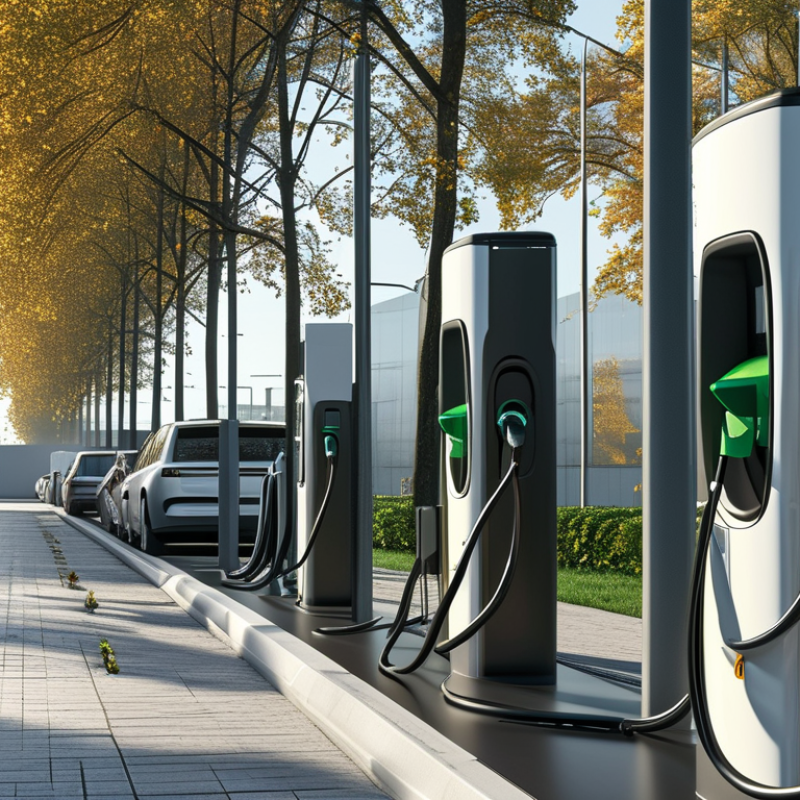
The future of electric vehicle (EV) charging networks will focus on
ultra-fast charging technologies. These innovations aim to reduce charging times significantly.
Imagine charging your EV in just 10 to 20 minutes.
This speed can transform how we think about daily travel. Long waits at charging stations will become
a thing of the past.
As we see more high-speed chargers, accessibility will improve. More drivers will feel confident about adopting EVs.
Battery technology will evolve, making ultra-fast charging safer. However, the upfront costs of this infrastructure can
be daunting. There are challenges regarding energy supply and grid capacity as well.
Tips: Choose charging locations wisely. Look for sites with multiple
fast chargers to avoid congestion. Keep an eye on advancements in battery redesigns. Staying informed can help you
adapt to these changes gracefully. It's crucial to consider how these transformations will affect
urban planning and energy policies.
The future of EV networks requires thoughtful approaches, not just rapid advancements.
The global electric vehicle (EV) charging infrastructure is expected to see dramatic changes by 2030. With the rise in electric vehicles, demand for charging stations will surge. Cities and rural areas alike will need varied solutions to meet this need. As it stands, investor interest is growing, yet the pace of infrastructure development must catch up. Current problems include insufficient charging points in many locations.
Innovations will play a significant role in transforming EV charging networks. The integration of renewable energy sources offers substantial potential. For instance, solar-powered charging stations could drastically reduce reliance on fossil fuels. Additionally, smart charging technologies will optimize electricity usage during off-peak hours. These advancements should enhance user experience. However, challenges like consumer education and grid stability must be addressed.
The journey to a robust charging infrastructure is complex but necessary. Cities will need to collaborate with energy providers to create efficient networks. Urban planning must factor in charging locations to prevent bottlenecks. Smart city solutions can aid in managing EV loads, but there is still much work ahead. The future of EV charging will not be seamless; it will require adaptability and ongoing investment.
| Year | Number of Charging Stations | Number of Fast Chargers | Total Investment (USD Billion) | % Increase from Previous Year |
|---|---|---|---|---|
| 2023 | 1,200,000 | 300,000 | 20 | - |
| 2024 | 1,500,000 | 350,000 | 25 | 25% |
| 2025 | 2,000,000 | 500,000 | 35 | 40% |
| 2026 | 2,500,000 | 700,000 | 50 | 25% |
| 2027 | 3,000,000 | 1,000,000 | 70 | 20% |
| 2028 | 3,500,000 | 1,200,000 | 90 | 15% |
| 2029 | 4,000,000 | 1,500,000 | 110 | 14% |
| 2030 | 4,500,000 | 2,000,000 | 130 | 12% |
The future of electric vehicle (EV) charging networks will significantly rely on integrating renewable energy sources. According to a recent report by the International Energy Agency (IEA), renewable energy accounted for nearly 29% of global electricity generation in 2022. This number is expected to rise, facilitating more sustainable charging solutions for EV users.
As charging stations adopt solar panels and wine turbines, the dynamics of energy sourcing will change. For example, a study from BloombergNEF predicts that by 2040, over 60% of EV charging may be powered by renewables. This could lead to lower charging costs and a decreased dependency on fossil fuels. The integration of energy storage systems, such as batteries, can also help manage peak loads, ensuring reliable service even during high-demand periods.
However, challenges persist. Not all regions have equal access to renewable resources, which can create disparities in charging infrastructure quality. Additionally, the initial costs associated with installing such systems can be high, limiting widespread adoption. Policymakers and stakeholders will need to work together to address these barriers, ensuring that innovation in charging solutions aligns with sustainability goals. Balancing efficiency and environmental responsibility remains a complex task for the industry.
The future of electric vehicle (EV) charging networks is intertwined with advancements in smart charging and vehicle-to-grid (V2G) technologies. Smart charging allows EV owners to optimize charging times. This means charging during off-peak hours. Such features not only reduce costs but also help to balance electricity demand. For instance, during high-energy demand periods, smart chargers can delay charging. This reliance on timing can lead to more efficient energy use.
Vehicle-to-grid technology takes this a step further. It enables EVs to supply energy back to the grid. This is particularly vital during peak demand periods. EVs can act as mobile batteries, helping to stabilize the grid. However, this system is not without challenges. Issues arise in battery degradation over time. The long-term financial incentives for EV owners are also unclear. Stakeholders need clarity on compensation models to actively participate.
Adopting these technologies calls for careful consideration. Charging networks must adapt to varying energy sources. Local regulations can complicate implementation. Effective communication between utilities and EV owners is essential. It fosters a cooperative relationship that ensures mutual benefits. With evolving technology, the potential for transformation is immense, but significant reflection on its execution is necessary.
The evolution of electric vehicle (EV) charging networks hinges significantly on government policies. These policies can provide incentives that motivate infrastructure development. Grants and subsidies may lower the barriers for local governments and private companies to invest in charging stations. Strong policies can prioritize the deployment of fast chargers in urban areas, boosting convenience and accessibility for users.
Moreover, regulations that mandate the installation of chargers in new buildings will reshape the landscape profoundly. Such requirements could lead to a surge in available charging points, especially in densely populated areas. There are still challenges to consider, such as variations in state policies and the coordination between federal and local governments. This fragmentation can hamper the effective rollout of a unified charging network.
Ongoing dialogues about the expansion of the grid also require attention. Energy sources for charging stations must align with sustainability goals. However, the transition is not seamless. Some regions may lack the necessary power supply, complicating the situation. As governments tackle these complexities, the growth of EV charging networks will reflect their commitment to a greener future. The road ahead will demand collaboration and adaptability.
: The infrastructure is expected to change dramatically, with increased demand for charging stations.
Many locations lack enough charging points to meet the growing needs of electric vehicles.
Innovations like renewable energy integration and smart charging will optimize usage and user experience.
They provide incentives like grants to encourage investments in charging stations.
Mandates for chargers in new buildings could significantly increase available charging points.
They can hinder the rollout of a unified and effective charging network across regions.
They need to collaborate with energy providers to create efficient networks and plan strategically.
It is essential to address consumer knowledge and acceptance, impacting infrastructure success.
They could reduce reliance on fossil fuels and improve sustainability in charging options.
No, ongoing investment and adaptability will be necessary to manage the infrastructure's complexities.
The evolution of EV charging networks is set to transform significantly in the coming years, driven by several key factors. Firstly, the shift toward ultra-fast charging technologies will enable quicker replenishment of electric vehicle batteries, enhancing the overall user experience. This transition is complemented by the projected growth of global EV charging infrastructure, expected to expand substantially by 2030, making charging more accessible.
Moreover, the integration of renewable energy sources into charging stations promises a greener and more sustainable solution for EV users. Advancements in smart charging and vehicle-to-grid technologies will also play a crucial role, allowing for more efficient energy distribution and usage. Furthermore, government policies will impact how EV charging networks evolve in the future, fostering innovation and adoption of these technologies. Overall, how will EV charging networks evolve in the future hinges on these technological advancements and supportive policies, paving the way for a more sustainable electric transportation ecosystem.

Orange Energy