As electric vehicle adoption accelerates in 2026, charging stations must become more than roadside electricity outlets. They should operate as flexible energy hubs. Solar canopies can generate power above parked vehicles. On-site batteries can store midday electricity for evening charging. Smart software can then adjust charging speeds when renewable supply changes.
So, how do charging stations integrate with renewable energy? The answer combines clean generation, storage, demand management, and dependable grid connections. A station may charge vehicles directly from solar panels, draw wind-generated electricity through the grid, or discharge batteries during peak demand. Renewable energy certificates and transparent carbon accounting can help verify electricity sources. However, certificates do not replace physical clean power. That distinction deserves attention.
Francesco La Camera, Director-General of the International Renewable Energy Agency, said, “Renewables are the cheapest source of power in history.” His point supports the business case, but real projects remain complicated. Developers must study local sunlight, wind availability, transformer capacity, traffic patterns, and seasonal demand. A rural station may need larger batteries. An urban site may need stronger grid upgrades.
Small details affect reliability. A hot battery room requires ventilation and thermal controls. A cloudy afternoon can reduce solar output sharply. Drivers still expect predictable charging times. Therefore, renewable integration should include backup capacity, open data, certified equipment, and regular performance reviews. Not every station will achieve complete energy independence. That is acceptable. The stronger goal is measurable emissions reduction, stable service, and a system that improves through honest monitoring.
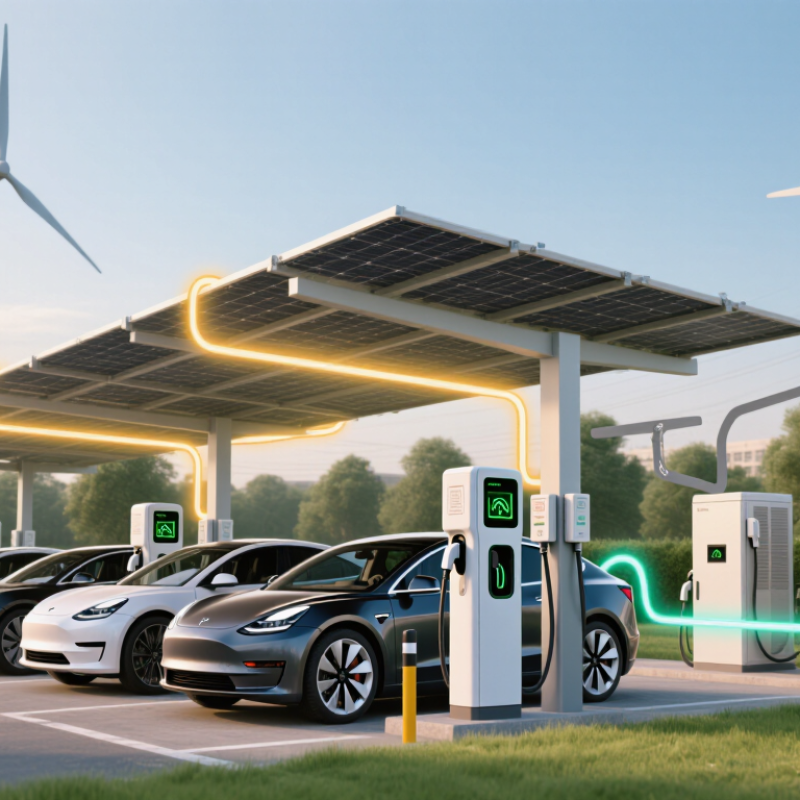
Solar photovoltaic systems are often the most practical renewable source for EV charging stations. They can cover parking canopies, rooftops, and nearby land. The International Energy Agency reported that renewables produced about 30% of global electricity in 2023. Solar and wind led this growth. Their declining costs make daytime charging increasingly attractive.
Wind power can support larger charging hubs, especially in windy regions with available land. Small wind turbines are less predictable in urban areas. Hydropower offers stable output, but suitable sites are geographically limited. Geothermal energy can provide reliable power where underground heat resources exist. Biogas may help operate backup generators, although feedstock quality needs careful control.
IRENA reported 473 gigawatts of renewable capacity additions in 2023, representing about 86% of global new power capacity. The message is encouraging, but not simple. Renewable supply still changes hourly.
Tips
Combine solar with battery storage and smart charging software. Charge vehicles when renewable output is highest. Keep a grid connection for cloudy days and demand spikes. Measure energy flows at five-minute intervals. This exposes losses that monthly data can hide.
A solar-only design may look elegant, yet it can disappoint during winter evenings. Site assessments should examine local weather, transformer capacity, parking patterns, and future vehicle demand. The IEA’s Global EV Outlook 2024 also stresses coordinated charging as EV adoption expands. Perfect forecasting is unrealistic. Careful monitoring remains essential.
How to Power EV Charging Stations With Renewable Energy 2026
Assessing demand must come before choosing solar panels or batteries. The International Energy Agency reported about 14 million electric cars were sold globally in 2023. It also estimated electric vehicle electricity demand reached roughly 130 TWh that year. However, annual energy is only half the problem. A station with ten 150 kW chargers could require 1.5 MW during a short evening peak. That demand can overload a weak feeder, even when daily consumption appears modest. Measure vehicle arrivals, charging duration, battery size, and local temperature for at least several weeks. Use fifteen-minute load data, not monthly averages. Charging behavior remains difficult to predict.
A practical system may combine grid supply, solar generation, battery storage, and managed charging. Solar can reduce daytime purchases, while storage can limit transformer peaks after sunset. The International Renewable Energy Agency reported that renewables represented 86% of new global power capacity in 2023. Yet renewable output is variable. A cloudy winter afternoon can expose an undersized design. Select inverters, transformers, protection equipment, and backup capacity around the highest credible load. Include expansion space, because charger utilization may grow faster than expected. My engineering concern is simple: forecasts often look precise, but user behavior is not.
Tips: Start with a measured load profile. Model holidays and bad weather. Compare battery costs with demand charges. Keep critical charging available during outages. Test the control system before opening. A smaller renewable system with flexible charging may outperform a larger, poorly coordinated installation.
| Station Profile | Charger Configuration | Average Energy per Session | Daily Sessions | Estimated Daily Energy Demand | Estimated Peak Charging Load | Recommended Renewable System | Indicative Battery Storage |
|---|---|---|---|---|---|---|---|
| Workplace and Community Parking | 12 AC chargers × 7.2 kW | 24 kWh | 10 | 240 kWh/day | 43.2 kW | 75 kWDC solar + grid connection | 100 kWh |
| Urban Fast-Charging Hub | 8 DC chargers × 150 kW | 45 kWh | 18 | 810 kWh/day | 600 kW | 250 kWDC solar + grid connection + smart load management | 500 kWh |
| Highway Charging Plaza | 6 DC chargers × 150 kW | 60 kWh | 25 | 1,500 kWh/day | 450 kW | 450 kWDC solar + grid connection + peak-shaving battery | 1,000 kWh |
| Electric Delivery Fleet Depot | 20 AC chargers × 11 kW | 30 kWh | 40 | 1,200 kWh/day | 110 kW | 375 kWDC solar + managed overnight charging | 750 kWh |
| Solar Canopy with Limited Grid Capacity | 4 DC chargers × 100 kW | 40 kWh | 15 | 600 kWh/day | 400 kW | 200 kWDC solar + bidirectional battery inverter | 800 kWh |
| Planning basis: Daily energy demand equals average energy per session multiplied by daily sessions. Peak load assumes simultaneous operation of all listed chargers before applying managed charging. Renewable sizing uses approximately 4.0 peak-sun-hours per day and an 80% system-performance factor; actual sizing depends on location, season, shading, roof or canopy area, interconnection limits, and local load profiles. | |||||||
Designing renewable-powered EV charging infrastructure starts with the site, not the charger. Solar canopies can shade vehicles while producing electricity above each parking bay. A typical canopy should account for roof angle, snow load, drainage, and safe maintenance access. Wind turbines need different treatment. Their output depends on local wind maps, turbulence, tower height, and nearby buildings. Small turbines may appear attractive, but weak wind conditions can make them inefficient.
A grid-connected system provides stability when renewable output falls. Engineers should size transformers, switchgear, cables, and protection systems for peak charging demand. Smart controls can reduce charging power during cloudy or calm periods. Battery storage can absorb midday solar energy and release it during evening traffic. This reduces grid stress, but batteries add thermal management, fire protection, and replacement costs. The design must be measurable.
Real-world operation is less predictable. A dust-covered solar panel can quietly reduce production. A single faulty sensor can distort energy forecasts. Continuous monitoring should track generation, charger load, battery temperature, voltage quality, and downtime. Technicians also need clear inspection routes and documented maintenance procedures. A first design is rarely perfect. Seasonal data may reveal an oversized turbine, a small transformer, or poor charger placement. Reviewing that evidence matters more than defending the original plan. Reliable infrastructure grows through testing, adjustment, and careful field records.
By 2026, renewable-powered charging sites will need more than solar panels. They need batteries and responsive software. The International Energy Agency reported over four million public chargers worldwide in 2023. It also expects public charging capacity to grow nearly sixfold by 2035 under current policies. That growth will increase pressure during evening peaks.
A battery can store midday solar power and release it when drivers arrive after work. For example, a 1 MWh battery could support a 250 kW charging load for roughly four hours, before efficiency losses. IRENA reported that utility-scale battery storage costs fell 89% between 2010 and 2023, reaching about 273 dollars per kWh. Prices vary widely, though. Installation, cooling, safety systems, and grid upgrades still matter.
Smart energy management should limit simultaneous charging, forecast solar output, and reserve battery capacity for expensive peak periods. It can also prioritize vehicles leaving soon, rather than charging every vehicle equally. Real sites remain messy. Weather changes quickly, drivers ignore schedules, and batteries may sit idle when their value is highest. Poor control settings can even increase demand charges. Continuous monitoring, transparent performance data, and regular tariff reviews are therefore essential. Forecasts help, but they are not guarantees.
Renewable EV charging stations need daily operating plans, not just clean power. Operators should compare solar or wind output with charging demand and available battery capacity. During cloudy afternoons or calm nights, smart load management can reduce charging speed before service becomes unreliable. A clear backup plan matters. Staff should know when stored energy is low and how grid power, where available, will support essential charging.
Monitoring should combine live data with physical checks. Track energy produced, energy delivered, battery state, charger availability, and fault alerts. Review unusual patterns, such as one port drawing less power than nearby ports. Small details matter. No dashboard is perfect. A sensor can report normal conditions while a connector feels hot or shows visible wear, so staff need a simple inspection routine.
Maintenance protects both uptime and equipment life. Keep solar panels clear of dust, leaves, and snow, and check mounting hardware after severe weather. Inspect charging cables for cuts, flattened sections, or loose connections. Qualified technicians should handle electrical repairs and battery-system servicing. Record each inspection, repair, and recurring fault; these notes help reveal problems that single alerts miss. Some maintenance schedules will need adjustment as site use changes. That learning takes time.
Operating, Monitoring, and Maintaining Renewable EV Charging Stations
This illustrative 12-month site dataset compares renewable electricity’s share of charging energy with charger availability. Track both metrics to assess clean-energy performance and operational reliability; actual results vary with weather, grid supply, usage, and maintenance.
Solar power is often the simplest option. Panels can cover parking canopies, rooftops, or nearby land. Daytime charging benefits most. However, solar output falls during cloudy weather and winter evenings.
Yes, especially at larger sites with steady winds and available land. Small turbines may perform poorly in dense urban areas. Wind conditions should be measured before installation. A windy-looking site is not always suitable.
Batteries store midday solar energy for evening charging. A 1 MWh battery could support a 250 kW load for about four hours. Actual output will be lower after efficiency losses. Batteries can also reduce pressure during expensive peak periods.
It forecasts renewable output and limits simultaneous charging. It can prioritize vehicles leaving soon. The system may reserve battery capacity for evening demand. Drivers may dislike slower charging, though.
Usually, yes. Grid power can support charging during cloudy days and demand spikes. It also provides a practical backup when batteries are nearly empty. A solar-only design may look attractive but disappoint after sunset.
Track energy production, delivered energy, battery state, charger availability, and fault alerts. Five-minute data can expose losses hidden by monthly records. Compare the dashboard with physical conditions. Data can still be wrong.
Staff should check connectors, cables, panels, and mounting hardware. Look for heat, cuts, flattened cable sections, loose connections, dust, leaves, and snow. A simple walk-around matters. Screens cannot detect everything.
Clean panels regularly and inspect hardware after severe weather. Qualified technicians should repair electrical systems and service batteries. Record every inspection, repair, and repeated fault. Maintenance plans may need adjustment as usage changes.
Use weather forecasts, local demand records, and battery information together. Reduce charging speed before stored energy becomes critically low. Keep staff instructions clear. Perfect forecasting is unrealistic. Careful monitoring remains essential.
Renewable-powered EV charging stations can draw electricity from solar panels, wind turbines, or a combination of renewable generation and the local grid. The right design begins with an assessment of expected charging demand, site conditions, available space, and the timing of vehicle use. These factors help determine the suitable system size and whether on-site generation can meet demand consistently or should be supported by grid power.
A battery storage system can save surplus renewable electricity for periods of low generation or peak charging demand. Smart energy management can coordinate generation, storage, and charging to use available power efficiently. To understand how do charging stations integrate with renewable energy, consider how these components work together as one system. Regular monitoring and maintenance help operators track performance, identify issues, and keep equipment working reliably as energy needs change.

Orange Energy