Why Smart EV Charging Improves Energy Efficiency?

Time:2026-09-14 Author:Henry
0%

Electric vehicles are moving from early adoption into everyday transport. The IEA’s Global EV Outlook 2024 reported nearly 14 million electric car sales worldwide in 2023. China, Europe, and the United States led this expansion. That growth also increases pressure on local electricity networks. A vehicle charging at 7 kW can draw the same power as several household appliances. Millions charging together can create sharp evening peaks.

So, how does smart ev charging improve energy efficiency? Smart charging uses software, tariffs, grid signals, and vehicle data. It delays charging when demand is highest. It can start when solar or wind power is more available. It can also reduce charging speed temporarily without leaving the vehicle unready. The U.S. Department of Energy identifies managed charging as a way to reduce peak demand and support grid flexibility. The IEA also notes that flexible electricity demand will become more valuable as renewable generation expands.

The benefits are practical. A home charger may pause at 6:00 p.m., then resume at 11:30 p.m. when the neighborhood load falls. In some systems, it can charge during midday solar production. This reduces wasted renewable energy and limits costly grid upgrades. Field programs show promise, but results depend on customer behavior, charger communication, and utility design. The picture is promising, not perfect. Poorly designed controls can frustrate drivers or shift demand into another crowded period. Reliable smart charging therefore requires accurate data, transparent pricing, cybersecurity, and clear backup settings. This article examines the technologies, evidence, and remaining limitations behind more efficient EV charging.
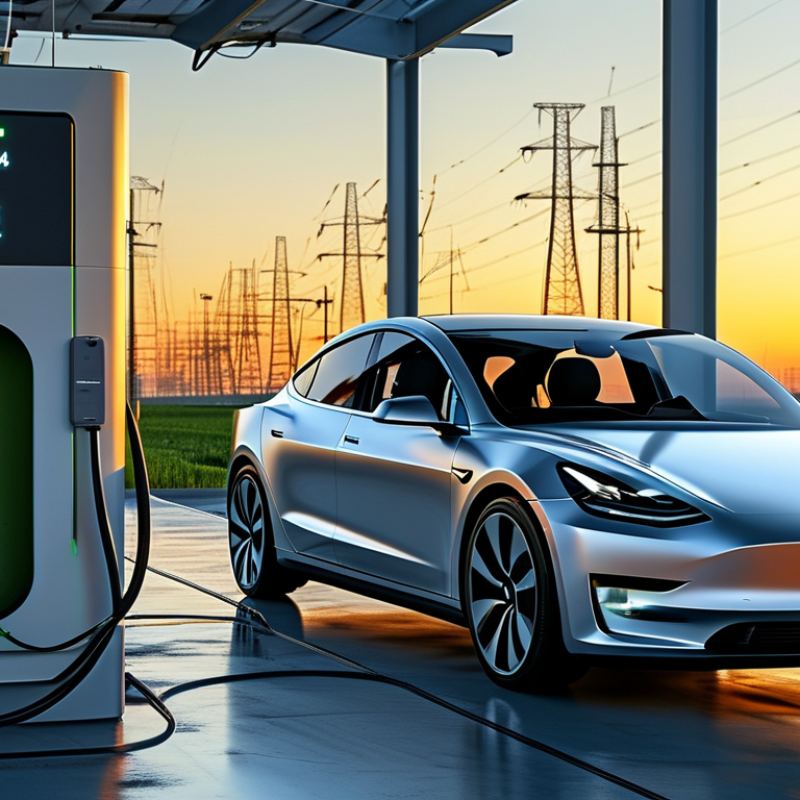
Why Smart EV Charging Improves Energy Efficiency?

What Is Smart EV Charging?

Smart EV charging is a connected method of controlling when and how an electric vehicle receives power.

A charger communicates with software, the vehicle, and sometimes the home energy system. It can delay charging during expensive or high-demand periods. It may charge faster when electricity demand falls or rooftop solar produces surplus power. The aim is not simply to add electricity, but to use it more intelligently.

A household example is easy to picture.

You plug in at 6 p.m. with a nearly empty battery. Instead of charging immediately, the system may begin at midnight and finish before your morning commute.

It can also reduce charging power when an oven, heat pump, and washing machine operate together. This helps prevent circuit overload and may reduce unnecessary peak electricity use.

User settings still matter. A driver can usually request immediate charging when plans change.

Smart charging depends on accurate data, suitable electrical capacity, and correctly installed equipment.

Certified hardware and a qualified electrician are important for safe operation. The system is not magic. Electricity prices can change, forecasts can be inaccurate, and internet connections may fail.

A schedule based only on cost might also ignore battery needs or renewable energy availability. Good systems provide manual controls, clear charging information, and sensible backup behavior.

I would not treat every automatic setting as perfect. Regularly checking energy use can reveal whether the promised efficiency actually appears at home.

How Smart Charging Manages Electricity Demand

Why Smart EV Charging Improves Energy Efficiency?

How Smart Charging Manages Electricity Demand

When several electric vehicles charge together, they can create a sharp demand spike. Smart charging reduces this pressure. It adjusts charging speed according to grid conditions, household use, and available electricity. Instead of charging every vehicle immediately, the system may stagger sessions across several hours. A vehicle arriving at 6 p.m. could charge slowly while cooking loads are high. It may charge faster after midnight, when demand usually falls.

The system can also respond to local energy production. On a sunny afternoon, it may direct more power to vehicles using available solar electricity. At a workplace, charging schedules can reflect departure times and battery needs. These decisions require accurate meters, reliable communication, and clear safety controls. Electricity tariffs can guide the schedule, but low prices should not override battery temperature limits or user requirements. People still need control.

Real-world operation is rarely perfect. A missed signal, weak internet connection, or sudden departure can disrupt a carefully planned schedule. Poor settings may leave a driver with less charge than expected. This is a practical weakness worth acknowledging. Effective systems allow manual charging, display clear status updates, and record charging data for review. They should also protect personal information and follow relevant electrical and cybersecurity standards. Small delays can matter. Good demand management balances efficiency with convenience, reliability, and the driver’s actual routine.

Why Smart Charging Reduces Energy Waste

Why Smart EV Charging Improves Energy Efficiency?

Why Smart Charging Reduces Energy Waste

Electric vehicles do not waste energy only during driving. Charging at the wrong time can also increase grid losses. When many vehicles plug in after work, local transformers face sudden demand. Some electricity then travels through overloaded equipment instead of serving homes efficiently. Smart charging delays or adjusts charging without interrupting the driver’s schedule.

The International Energy Agency’s Global EV Outlook 2024 reported nearly 14 million electric cars sold worldwide in 2023. It also identified managed charging as an important source of grid flexibility. This matters because flexible charging can follow periods of lower demand or stronger renewable generation. A vehicle parked at 7 p.m. may not need full power until 7 a.m. Charging later can reduce peak pressure and unnecessary backup generation.

The U.S. National Renewable Energy Laboratory has found that coordinated charging can reduce distribution-grid impacts compared with uncontrolled charging. Real-world results still depend on tariffs, software, weather, and local grid capacity. The system is not flawless. A poorly designed schedule may delay charging too much or shift demand into another crowded period. Drivers need clear controls, reliable data, and an easy override. Smart charging works best when convenience remains visible. Less waste should not feel like less freedom.

How It Supports Renewable Energy Integration

Smart EV charging improves energy efficiency by matching vehicle demand with cleaner electricity. This matters as renewable generation becomes less predictable. Solar power often peaks at midday, while drivers usually plug in after work. Smart systems can delay charging for several hours. They can also increase charging when wind or solar output is high.

The International Energy Agency estimated that electric vehicles used about 130 TWh globally in 2023. That was still below 0.5% of final electricity consumption, but demand is growing quickly. Meanwhile, IRENA reported that renewables added approximately 473 GW of capacity in 2023. Smart charging helps absorb this new supply instead of wasting it during low-demand periods. A parked car can become a flexible energy load. It is not a perfect solution. Apartment residents may lack private chargers, and poorly designed schedules can inconvenience drivers. Battery wear and data security also require careful management.

Tips: Set charging for sunny midday hours when possible. Use a lower overnight tariff only when the grid is relatively clean. Keep a minimum charge level for emergencies. Check whether the charger uses renewable-energy signals, not only cheap-price signals. Real-world trials from the National Renewable Energy Laboratory show that managed charging can reduce peak demand, but results depend on local networks, driver habits, and charger availability. Flexibility needs trust. It also needs better access.

Why Smart EV Charging Improves Energy Efficiency? - How It Supports Renewable Energy Integration

Key energy-efficiency mechanisms and renewable-integration benefits of managed electric-vehicle charging

Energy Dimension Documented Data or Typical Range How Smart Charging Responds Efficiency and Renewable-Energy Benefit
Charging conversion efficiency Typical grid-to-battery efficiency is approximately 85%–95%, depending on charger design, battery temperature, charging power, and state of charge. Selects efficient charging power levels and avoids unnecessary repeated charging or balancing cycles. More of the electricity drawn from the grid is stored in the battery, reducing wasted energy and charging-related losses.
Vehicle availability for load management Passenger vehicles are parked for the large majority of the day, creating extended periods when charging can be delayed or modulated without affecting mobility. Delays, pauses, or adjusts charging while preserving the user’s required departure time and battery level. Transforms inflexible electricity demand into flexible demand, reducing the need for inefficient peak-generation resources.
Solar-energy alignment Solar photovoltaic generation is concentrated during daylight hours, with output changing according to sunlight, weather, and season. Schedules workplace, fleet, or home charging during periods of strong solar production when vehicle dwell time permits. Uses more renewable electricity directly, reduces midday renewable curtailment, and lowers charging demand during evening peaks.
Wind-energy alignment Wind output varies by location and weather and may be available during nighttime or other low-demand periods. Increases charging during verified periods of high wind generation or low-carbon electricity availability. Absorbs otherwise underused renewable generation and improves utilization of variable wind resources.
Peak-demand management Unmanaged EV charging can coincide with existing residential evening demand, increasing local and system peak load. Reduces charging power during constrained periods and resumes charging after the peak or when network conditions improve. Improves utilization of existing grid assets and can reduce the need for additional peak-capacity infrastructure.
Renewable-electricity growth Renewables supplied approximately 30% of global electricity generation in 2023, according to the International Energy Agency. Matches flexible EV demand with periods when renewable generation is available and electricity emissions are lower. Enables higher renewable penetration without requiring all charging demand to occur at one fixed time.
Grid balancing response EV charging power can be increased, reduced, or temporarily paused through digital controls, subject to driver requirements and equipment limits. Responds to grid frequency, network congestion, electricity prices, renewable forecasts, and carbon-intensity signals. Helps balance short-term fluctuations in renewable supply and demand without immediately building new generation or storage capacity.
Vehicle-to-grid potential Bidirectional charging can allow compatible vehicles to export stored electricity to buildings or the grid; deployment depends on vehicle, charger, tariff, and market rules. Discharges energy during system stress and recharges when renewable output or grid capacity is higher. Provides distributed short-duration storage, supports renewable balancing, and can reduce reliance on fossil-fuel peaking generation.
Data note: The efficiency range is an engineering range that varies by charging equipment and operating conditions. Renewable generation profiles and grid benefits vary by location, season, electricity mix, and charging behavior. Sources: International Energy Agency, Global Energy Review 2024; U.S. Department of Energy, Alternative Fuels Data Center; National Renewable Energy Laboratory, Transportation Research; International Renewable Energy Agency publications.

Key Factors That Influence Charging Efficiency

Why Smart EV Charging Improves Energy Efficiency?

Key Factors That Influence Charging Efficiency

Smart EV charging improves efficiency by controlling when and how electricity reaches the battery. It considers grid demand, battery temperature, charging power, and state of charge. Timing matters. The International Energy Agency’s Global EV Outlook 2024 estimated that electric vehicles used about 130 TWh of electricity worldwide in 2023. Better control becomes important as adoption expands. A charger operating during a local peak may increase grid losses and require costly network upgrades. Managed charging can pause for ten minutes, then resume when demand falls.

Power conversion is another key factor. Research from the U.S. Department of Energy shows that charging losses can reduce wall-to-battery efficiency. Older equipment, long cables, and high temperatures may worsen those losses. Heat is waste. Smart systems can lower power when battery temperature rises or charging approaches completion. They can also coordinate several vehicles, preventing every unit from drawing maximum current at 6 p.m. National Renewable Energy Laboratory research indicates that managed charging can reduce distribution stress, although results depend on feeder design, tariffs, and driver schedules.

Real-world performance is less tidy. A driver may override a schedule before a night shift. A weak network connection can interrupt control. That is not perfect. Reliable systems need clear departure settings, local fallback control, accurate meter data, and transparent consent. Efficiency should include the whole session, not only the charger’s advertised rating. Measuring wall energy, delivered battery energy, waiting time, and peak demand reveals losses that dashboards may hide. Seasonal testing remains necessary because cold weather, battery age, and short trips can change results.

Why Smart EV Charging Improves Energy Efficiency?

Key factors that influence charging efficiency, measured as the estimated energy stored in the battery compared with electricity drawn from the grid.

Smart charging can improve efficiency by avoiding extreme battery temperatures, reducing charging power when conversion losses rise, and completing charging closer to the time of departure. Values shown are representative typical figures; actual efficiency varies by vehicle, charger, battery condition, and climate.

FAQS

How does smart charging reduce electricity demand spikes?

It spreads charging across several hours instead of starting every vehicle immediately. A car arriving at 6 p.m. may charge slowly during cooking hours, then charge faster after midnight.

Can smart charging use locally generated electricity?

Yes. On a sunny afternoon, the system may direct more power to vehicles. This can use available solar electricity and reduce grid demand.

What information does smart charging consider?

It may consider grid demand, household use, battery temperature, charging power, and battery level. Departure time also matters. Settings can be imperfect.

Does smart charging always reduce charging losses?

Not always. Long cables, old equipment, high temperatures, and inefficient power conversion can waste electricity. Heat is waste.

Can charging schedules protect the vehicle battery?

Smart systems may lower charging power when the battery becomes hot or nearly full. However, battery age and cold weather can change results.

What happens if a driver needs the vehicle earlier than planned?

The driver should be able to override the schedule and start charging manually. This may reduce efficiency, but convenience and reliability still matter.

What problems can interrupt smart charging?

A weak internet connection, missed signal, inaccurate meter, or sudden departure can disrupt the plan. Small delays can matter.

How can users check whether charging is truly efficient?

They can compare electricity drawn from the wall with energy delivered to the battery. Waiting time, peak demand, temperature, and seasonal performance also deserve review.

Does cheaper electricity always mean better charging?

No. Low prices should not override battery temperature limits or departure needs. A cheaper session may be unsuitable.

What controls should a reliable system provide?

It should show clear status updates, offer local fallback control, record charging data, and protect personal information. People still need control.

Conclusion

Smart EV charging is an intelligent approach that adjusts when and how an electric vehicle charges according to electricity demand, battery needs, grid conditions, and available renewable power. Instead of charging at maximum speed at all times, it can schedule charging during off-peak periods, reduce power when the grid is under pressure, and resume when cleaner or more affordable electricity becomes available. This helps balance demand and prevents unnecessary strain on energy infrastructure.

So, how does smart ev charging improve energy efficiency? It reduces energy waste by avoiding inefficient charging periods, limiting peak demand, and coordinating power use with solar or wind generation. Charging efficiency is also influenced by battery condition, charging speed, temperature, electricity rates, grid availability, and user schedules. By managing these factors intelligently, smart charging can lower overall energy losses, support renewable energy integration, and make electric transportation more efficient and sustainable.

Henry

Henry

Henry is a dedicated marketing professional with a profound expertise in the company's offerings. With years of experience in the industry, he possesses an impressive understanding of the market dynamics and consumer behaviors that drive success. Henry is committed to sharing his insights through......