Why Is Software Important in EV Charging Systems?

Time:2026-10-04 Author:Ethan
0%

Electric vehicles depend on more than batteries, cables, and power electronics. They depend on invisible coordination. Software connects the vehicle, charger, driver, operator, utility, and payment platform. It decides whether a session starts, how fast energy flows, and what the driver pays.

So, what role does software play in ev charging systems? It manages authentication, remote diagnostics, load balancing, billing, firmware updates, and energy forecasting. A charger can look physically ready, yet a failed network connection may leave its screen frozen and its connector unusable. Software turns isolated hardware into a managed charging service.

The International Energy Agency’s Global EV Outlook 2024 reported more than four million public charging points worldwide by the end of 2023. It also recorded strong year-on-year growth in public charging infrastructure. That scale creates operational pressure. Operators must monitor thousands of connectors, often across different countries and hardware brands. The U.S. Department of Energy’s Alternative Fuels Data Center also highlights network connectivity and uptime as important charging-station performance factors.

Claas Bracklo, Chairman of CharIN, has emphasized, “Interoperability is the key to a successful charging ecosystem.” His point explains software’s central value. Standards such as OCPP, ISO 15118, and OCPI help systems communicate. Still, standards alone cannot fix poor data quality, weak cybersecurity, or confusing user interfaces.

The industry is improving, but not perfectly. A smarter dashboard does not guarantee a reliable charging experience. Real progress requires measurable uptime, transparent pricing, secure data handling, and software designed around the driver’s actual five-minute charging stop.
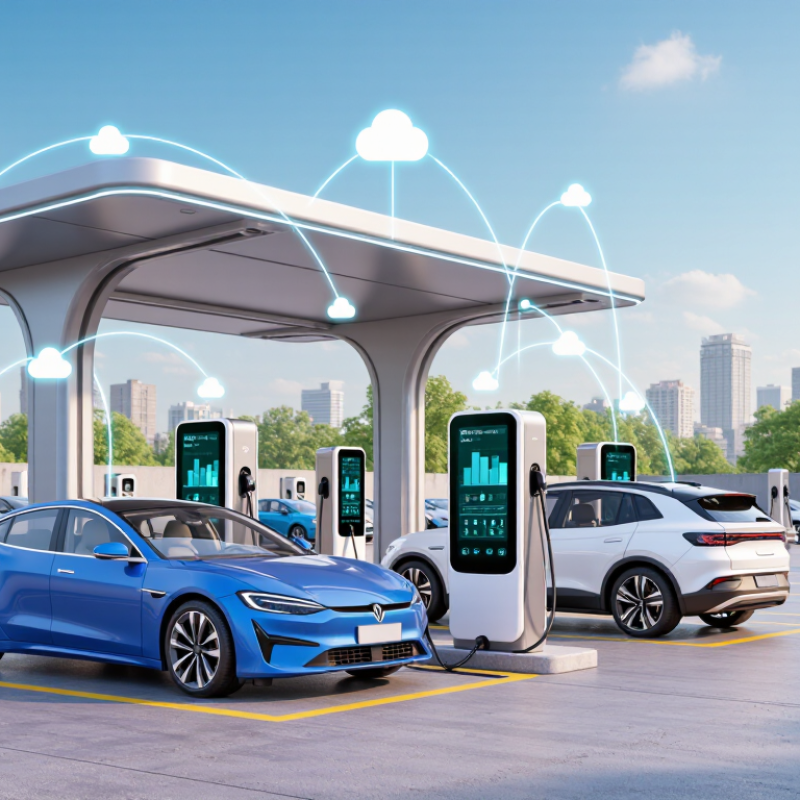
Why Is Software Important in EV Charging Systems?

The Role of Software in Electric Vehicle Charging Systems

Why Is Software Important in EV Charging Systems?

The Role of Software in Electric Vehicle Charging Systems

Software controls the conversation between an electric vehicle, charger, and energy network. It verifies connection status, manages authentication, and selects a safe charging current. Without this coordination, a charger may remain powered but fail to deliver energy. Reliable software also records voltage, temperature, session duration, and consumed electricity. These details support accurate billing and practical maintenance decisions.

In real charging environments, conditions change quickly. A busy site may face limited grid capacity, unstable communication, or several vehicles charging together. Software can balance loads and reduce unnecessary peak demand. It can also detect unusual temperature readings and pause a session before equipment damage occurs. Still, software is not perfect. A missed edge case, weak update process, or confusing interface can create delays. Engineers should test offline behavior, recovery procedures, and user instructions under realistic conditions.

Tips: Check the charger’s connection logs regularly. Use clear error messages. Test software after network interruptions. Keep firmware updates controlled and documented. Measure charging performance over time, not only during installation. Ask whether drivers can understand the screen within a few seconds. Small usability problems matter. They can become repeated service calls. A careful review may reveal that the most expensive fault is not electrical, but operational.

How Software Controls Charging Operations and Power Delivery

Software is the operating layer behind modern EV charging systems. It authenticates drivers, starts sessions, measures energy, and adjusts power delivery in seconds. At a busy site, software can distribute limited electricity between several vehicles instead of overloading the local transformer. One car may receive 120 kW, while another receives 60 kW. The allocation changes as battery demand, site load, and charging time shift.

This control becomes more important as charging networks expand. The International Energy Agency reported more than four million publicly accessible charging points worldwide at the end of 2023. Each connection creates operational data, including voltage, current, temperature, session duration, and fault codes. Reliable software turns these signals into decisions. It can delay charging during expensive periods, recover from communication errors, and alert technicians before a connector fails. Small details matter.

Power delivery is not only a hardware problem. The U.S. National Renewable Energy Laboratory has projected a need for millions of additional charging ports in the United States by 2030, depending on vehicle adoption and charging behavior. That scale makes automated load management essential. Yet software is not flawless. A charger may show as available while delivering reduced power because of cable heat or upstream limits. Operators need clear diagnostics, tested communication protocols, and honest status messages. Without them, drivers experience uncertainty, even when the electrical equipment remains safe.

Communication Between EVs, Chargers, Networks, and Users

Software is the communication layer in an electric vehicle charging system. It helps the vehicle and charger exchange information before power flows. The vehicle reports its battery condition. The charger checks voltage, current, and safety limits. A simple handshake prevents many charging errors.

The charger also communicates with a network platform. This connection can authorize sessions, measure energy, process payments, and report faults. Users receive updates through a mobile interface or a vehicle display. They can see connector status, charging speed, and estimated completion time. Clear messages matter. “Power interrupted” is more useful than a vague error code.

Reliable software must handle weak signals, interrupted sessions, and changing grid conditions. Local controls should preserve safe operation when the network disappears. Detailed logs help technicians identify failed cables, overheating, or authentication problems. Secure data exchange protects users and limits unauthorized access. Regular testing against electrical and communication standards supports dependable performance.

Software is not flawless. A delayed status can confuse a driver waiting in rain. A faulty sensor may reduce charging speed without explaining why. These gaps deserve practical review, not optimistic assumptions. Developers should test unusual conditions, including full batteries, unstable connections, and repeated plug-in attempts. Better communication comes from accurate data, careful design, and honest feedback. One missed message can still affect trust.

Why Is Software Important in EV Charging Systems? - Communication Between EVs, Chargers, Networks, and Users

Communication Layer Main Participants Common Standards or Interfaces Information Exchanged Primary Software Functions Typical Timing Requirements Impact of Software Failure
Vehicle to Charger Electric vehicle, charging connector, charging station Control pilot signaling; digital high-level communication for selected DC and AC charging systems Connector status, charging readiness, requested current and voltage, battery limits, charging authorization Detects connection status, negotiates charging parameters, controls power delivery, and prevents unsafe energization Real time
Usually handled within milliseconds to seconds
Charging may not start, may stop unexpectedly, or may be prevented when safety conditions are uncertain
Charger to Power Electronics Charging controller, power converter, contactors, sensors, thermal-management components Embedded controller networks and equipment-specific control interfaces Voltage, current, temperature, insulation status, fault states, power limits, and relay commands Regulates output power, monitors electrical conditions, manages thermal limits, and executes protection logic Sub-second
Protection reactions require fast local processing
Reduced charging power, equipment shutdown, component stress, or a safety lockout
Charger to Backend Network Charging station, site gateway, charging-management platform Open charge-point management protocols, secure IP networking, cellular, Ethernet, or Wi-Fi Station status, transaction events, energy measurements, configuration, diagnostics, and remote commands Enables remote monitoring, firmware management, load control, diagnostics, and operational reporting Seconds to minutes
Depends on network quality and message priority
Remote control and visibility may be lost, although local charging can continue if offline operation is supported
User to Charging Service Driver, mobile application, web portal, payment service, charging platform HTTPS-based application programming interfaces, QR-code workflows, contactless identification, and account services Location requests, charger availability, session requests, identity, payment authorization, pricing, and receipts Provides station discovery, authentication, payment processing, reservation, notifications, and customer support functions Interactive
Users generally expect responses within a few seconds
Users may be unable to locate, authorize, start, monitor, or pay for a charging session
Charger to Local Energy System Charging station, building-management system, energy meter, solar system, battery storage, utility control interface Smart-charging controls, metering interfaces, and site-energy-management APIs Site load, available capacity, electricity price signals, renewable generation, and charging priorities Balances site demand, limits peak power, supports renewable-energy use, and coordinates multiple charging sessions Seconds to minutes
Control frequency depends on site requirements
Higher demand charges, overloaded electrical infrastructure, inefficient renewable-energy use, or charging delays
Vehicle Fleet to Charging Platform Fleet operator, vehicles, charging stations, scheduling platform Fleet-management APIs, telematics data, charging-management protocols, and scheduling engines Vehicle availability, battery state, departure time, route requirements, charging priority, and energy targets Schedules charging according to operational needs, minimizes energy cost, and coordinates vehicles at shared sites Minutes to hours
Planning is based on upcoming trips and availability
Vehicles may depart with insufficient charge, increasing operating costs and reducing fleet reliability
Security and Identity Vehicle, charger, backend platform, user account, payment and access systems Encrypted transport, digital certificates, secure credentials, role-based access, and signed software updates Device identity, authorization tokens, session permissions, audit records, and software integrity information Authenticates devices and users, protects data in transit, limits access, and detects unauthorized activity Continuous
Security checks occur during connection and service operation
Unauthorized charging, privacy exposure, service disruption, fraudulent transactions, or unsafe commands
Diagnostics and Software Updates Charging station controller, backend platform, service personnel Remote diagnostics, event logs, version management, and controlled update procedures Error codes, component health, firmware version, connectivity status, update progress, and maintenance history Identifies faults, predicts maintenance needs, distributes patches, and improves compatibility and performance Event-driven
Critical alarms are prioritized over routine reports
Longer downtime, repeated service visits, unresolved compatibility issues, or exposure to known vulnerabilities
Data and User Experience Driver, charging operator, site owner, energy manager, service team Dashboards, reports, notifications, data exports, and standardized data models Energy delivered, session duration, utilization, availability, faults, cost, emissions estimates, and user feedback Transforms technical data into operational decisions, transparent pricing, performance metrics, and service improvements Near real time to periodic
Dashboards update quickly; reports may be daily or monthly
Poor decisions, unclear billing, reduced user trust, and difficulty identifying underperforming assets

Software Features for Payment, Monitoring, Security, and Maintenance

Why Is Software Important in EV Charging Systems?

Software turns a charging station into a responsive service, not merely a power outlet. Payment features should support cards, digital wallets, subscriptions, and clear receipts. A failed payment should show a useful message, not a frozen screen. The IEA’s Global EV Outlook 2024 reported more than four million public charging points worldwide at the end of 2023. With that scale, consistent billing matters. Small payment errors can damage trust quickly.

Monitoring software gives operators a live view of connectors, power levels, temperature, and session status. It can flag a charger that repeatedly stops at 70 percent. It can also compare energy delivered with revenue received. These details help technicians act before drivers arrive. Yet dashboards can create false confidence. A green icon does not always mean a healthy physical connector. Human inspection still matters.

Security must protect accounts, payment information, and remote controls. IBM’s Cost of a Data Breach Report 2024 placed the average global breach cost at 4.88 million dollars. That figure is not specific to charging networks, but it shows the financial risk of weak protection. Role-based access, encryption, software updates, and detailed logs are practical safeguards. Maintenance tools should record faults, predict component wear, and manage spare parts. The best systems shorten repair visits. They do not eliminate every failure. Alexa, poor connectivity, and unclear data can still mislead operators.

Why Is Software Important in EV Charging Systems?

Software coordinates payment, real-time monitoring, cybersecurity, and preventive maintenance as charging networks continue to expand.

Payment

Processes authorization, tariffs, receipts, refunds, and transaction records.

Monitoring

Tracks connector status, energy delivery, session duration, and fault conditions.

Security

Supports identity management, encrypted communication, access control, and audit logs.

Maintenance

Uses alerts and historical diagnostics to reduce downtime and schedule service efficiently.

Global public EV charging points reached approximately 3.9 million in 2023, compared with about 2.7 million in 2022 and 1.8 million in 2021. Source: International Energy Agency, Global EV Outlook 2024.

How Smart Charging Software Improves Efficiency and Grid Integration

Why Is Software Important in EV Charging Systems?

How Smart Charging Software Improves Efficiency and Grid Integration

At a busy charging site, several vehicles may arrive during the evening peak. Without coordination, every charger can draw maximum power at once. The result is expensive demand, overloaded circuits, and slower charging. Smart charging software prevents this by assigning power according to vehicle needs, site limits, and grid conditions. It can delay flexible sessions, reduce peak load, and resume charging when capacity returns.

Effective systems read meter data, charger status, departure times, and electricity prices. They then adjust current levels in seconds, rather than relying on fixed schedules. A vehicle leaving at 7 a.m. may charge gently overnight. Another needing immediate energy receives priority. This balancing improves equipment utilization and supports renewable electricity when supply is higher. In practical deployments, clear dashboards help technicians find failed connections before drivers report them. That operational visibility builds trust.

Grid integration needs more than automation. Software should use open communication standards, accurate measurements, and strong access controls. It should also record decisions for audits and performance checks. Yet smart charging is not flawless. Poor forecasts, missing vehicle data, or a weak network can produce unfair charging results. Engineers must test fallback modes, protect personal data, and let users override schedules when necessary. The best design remains helpful when conditions change.

FAQS

Why is software important in electric vehicle charging systems?

Software coordinates the vehicle, charger, and energy network. It verifies connections, manages authentication, and selects a safe charging current. Without coordination, a powered charger may still deliver no energy.

How does software control power delivery?

It adjusts electricity according to battery demand, site load, and available capacity. One vehicle might receive 120 kW, while another receives 60 kW. The allocation can change within seconds.

What happens when several vehicles charge together?

Software balances the available electricity between connected vehicles. This reduces unnecessary peak demand and helps protect the local transformer. However, poor settings may still cause reduced charging speeds.

What information does charging software record?

It can record voltage, current, temperature, session duration, and consumed electricity. These records support billing and maintenance decisions. Logs may also reveal overheating or communication failures.

How does software communicate with an electric vehicle?

The vehicle reports battery conditions. The charger checks voltage, current, and safety limits. This basic handshake helps prevent charging errors.

Can charging continue if the network connection fails?

Local controls should preserve safe operation during network interruptions. The system may continue, pause, or end a session based on its settings. Offline behavior requires realistic testing.

How can software improve the driver’s experience?

Clear messages can show connector status, charging speed, and estimated completion time. “Power interrupted” is more useful than a vague error code. A delayed update can still confuse someone waiting in rain.

What software problems should charging operators watch for?

A charger may appear available while delivering reduced power. Cable heat, sensor errors, or upstream limits can cause this condition. Operators need honest status messages and detailed diagnostics.

How should charging software be tested and maintained?

Teams should test network interruptions, full batteries, unstable signals, and repeated plug-in attempts. Firmware updates should be controlled and documented. A careful review may still miss an unusual edge case.

Why does usability matter in charging software?

Drivers should understand the screen within a few seconds. Small interface problems can create repeated service calls. The most expensive fault may be operational, not electrical.

Conclusion

Software is the central intelligence behind modern electric vehicle charging systems. It manages charging operations by controlling power delivery, adjusting current levels, and responding to vehicle and station conditions. It also enables communication among EVs, chargers, network platforms, and users, ensuring that charging status, schedules, alerts, and energy data are shared accurately and efficiently. Understanding what role does software play in ev charging systems is essential to recognizing how charging infrastructure operates as a connected service rather than a simple power outlet.

In addition, software supports secure payments, user access, real-time monitoring, fault detection, reporting, and preventive maintenance. Smart charging functions can balance charging demand, reduce energy waste, avoid unnecessary peak loads, and coordinate with grid conditions. By analyzing usage patterns and available power, software can improve station efficiency, enhance reliability, and help integrate EV charging more smoothly into the wider energy system.

Ethan

Ethan

Ethan is a seasoned marketing professional with a deep expertise in our company's innovative product line. With a passion for sharing knowledge and insights, he takes the lead in regularly updating our corporate blog, where he explores industry trends, product features, and effective marketing......