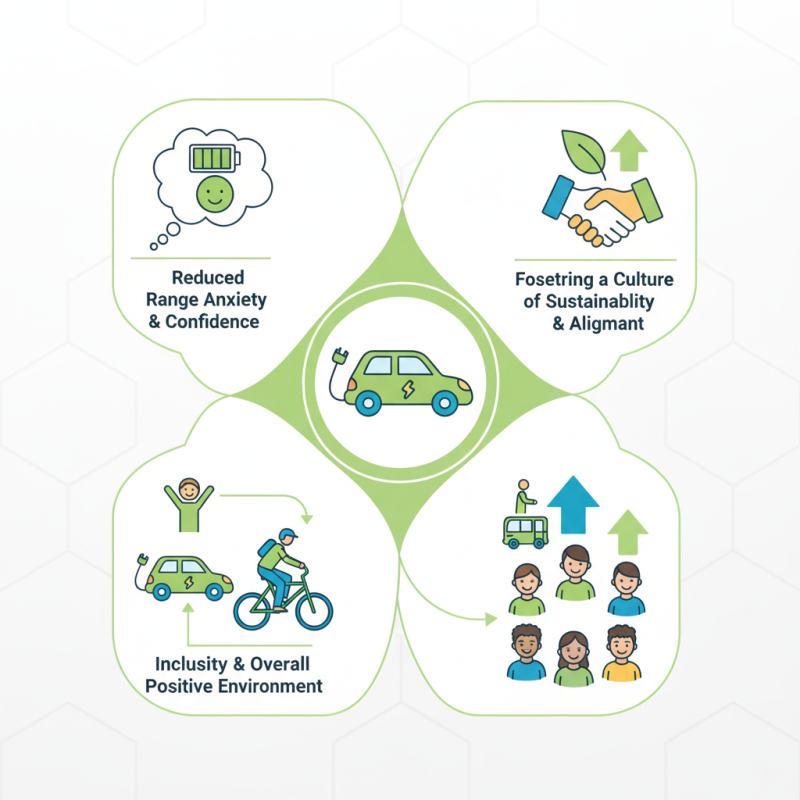
As more companies shift towards eco-friendly practices, workplace EV charging emerges as an influential factor in enhancing employee satisfaction. How does workplace EV charging support employees? Dr. Sarah Jenkins, an expert in sustainable workplace solutions, emphasizes, "Providing EV charging isn’t just about convenience; it’s about fostering a culture of sustainability that resonates with employees."
Integrating electric vehicle charging stations at work provides employees with practical benefits. It reduces range anxiety and helps them feel more confident in their green choices. With the increasing focus on environmental issues, employees appreciate companies that prioritize sustainability. This alignment can lead to greater job satisfaction and loyalty.
However, companies must also consider that not all employees may utilize EV charges. Some might feel left out if infrastructure lacks support for diverse commuting needs. Balancing this with attention to inclusivity is crucial. Nonetheless, creating a positive and supportive environment around EV usage can significantly uplift the overall employee experience.
Workplace EV charging stations are not just a convenience; they significantly boost employee satisfaction. According to a report by the Electric Vehicle Charging Association, companies that offer EV charging options see a 25% increase in employee morale. This is particularly essential as more individuals shift to electric vehicles, with sales projected to hit 30% of the market by 2030. Providing charging options shows that a company is forward-thinking and environmentally responsible.
Moreover, access to charging facilities can save employees time and reduce anxiety. Many workers worry about range anxiety—fear of running out of battery before reaching a charging station. Research indicates that 65% of current EV owners feel more satisfied knowing they can charge at work. This convenience can lead to less stress and higher productivity. However, not every company has the budget to implement these systems, leading to mixed feelings among employees.
While the benefits are clear, some organizations may face logistical challenges. Installing EV chargers can be costly and involve significant planning and maintenance. Many companies struggle to find a balance between offering charging access and managing costs. They must evaluate their specific context. Addressing these hurdles thoughtfully can lead to long-term employee engagement and a stronger commitment to sustainability.
| Dimension | Description | Impact on Employee Satisfaction |
|---|---|---|
| Convenience | Easily accessible charging stations at work. | Increases overall satisfaction and reduces stress related to charging logistics. |
| Environmental Impact | Promotes the use of electric vehicles and reduces carbon footprint. | Enhances employee morale and pride in working for an eco-friendly company. |
| Cost Savings | Reduced fuel costs for employees using electric vehicles. | Increases financial satisfaction and loyalty to the employer. |
| Employee Retention | Workplaces offering EV charging can attract and retain talent. | Higher retention rates lead to stronger team cohesion and workplace culture. |
| Work-Life Balance | Flexible charging options support varied employee schedules. | Contributes to improved work-life balance, leading to higher job satisfaction. |
: Many employees feel that access to charging stations boosts their job satisfaction. This is evident in recent studies.
Yes, workplaces with charging stations can see a 30% increase in employee retention. This showcases the benefits of such initiatives.
Sustainability initiatives can enhance employee morale. They appreciate workplaces that prioritize eco-friendly practices and reduce carbon footprints.
Not all charging stations are equal. Some workplaces may struggle with inadequate facilities, leading to dissatisfaction among users.
Companies should communicate openly about the charging station benefits. Feedback from employees can help address concerns and improve accessibility.
Employee ownership of electric vehicles plays a role. Some might feel these benefits cater to only a select group.
Yes, varying performance of charging stations can lead to mixed feelings among employees about the company’s sustainability efforts.
Openly addressing employee concerns is essential. Regular communication can help build a culture of trust and engagement.
Conducting surveys can be effective. Understanding diverse needs can lead to better implementation of EV charging facilities.
Workplace electric vehicle (EV) charging significantly boosts employee satisfaction by enhancing convenience and promoting sustainability. By providing accessible charging stations, companies simplify the daily commutes of their employees, allowing them to recharge during work hours and alleviating concerns around range anxiety. This convenience not only makes the workplace more attractive but also demonstrates a commitment to sustainable practices, which can positively influence employee morale and retention.
Moreover, employee perceptions of workplace EV charging initiatives reveal that such offerings are increasingly important in the modern work environment. Workers often feel more valued when their employers invest in green technologies, leading to higher levels of engagement and loyalty. Case studies of companies successfully implementing EV charging solutions show a clear link between these initiatives and improved workplace culture. In summary, understanding how does workplace EV charging support employees is vital for organizations aiming to enhance overall employee satisfaction and foster a more sustainable future.

 Orange Energy