The electric vehicle (EV) industry is currently undergoing a transformative shift. While conductive (wired) charging remains the backbone of current infrastructure, "Inductive Charging Solutions" (Wireless Power Transfer - WPT) are emerging as the essential missing link for autonomous fleets and seamless urban integration. As a leading manufacturer, Shenzhen Orange Energy Co., Ltd. is at the forefront of this transition, bridging the gap between high-power DC fast charging and future-proof wireless technologies.
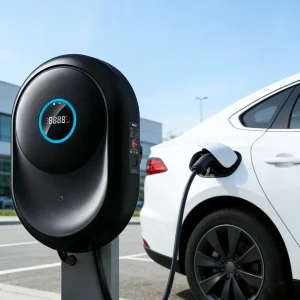
Inductive charging technology leverages magnetic resonance to transfer energy without physical cables. For industrial applications, this means fully automated "drive-over-and-charge" capabilities. In macro-industrial settings, manufacturers are moving toward integrating WPT pads directly into logistics warehouse floors, allowing AGVs (Automated Guided Vehicles) to maintain operational uptime without human intervention. This eliminates wear-and-tear on charging ports and reduces the maintenance costs associated with cable management.
The global race for standardized wireless charging—guided by SAE J2954 and IEC 61980—is intensifying. Businesses are no longer just asking "Is it possible?" but "How quickly can we deploy at scale?" Shenzhen Orange Energy has analyzed global market trends, observing a significant spike in demand for integrated energy solutions where wired infrastructure acts as the primary power grid, while localized inductive pads serve mission-critical, short-dwell-time logistics zones.
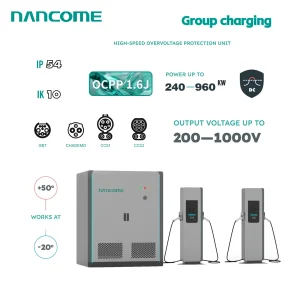
Deploying advanced EV infrastructure requires rigorous adherence to regional compliance. Whether it is FCC/CE certification for wireless emission safety or local grid integration standards, localization is paramount. Our factory processes ensure that every solution—be it our high-power DC stations or our R&D inductive pilots—meets local voltage regulations (400V/800V architectures) and cybersecurity protocols (OCPP 1.6/2.0).
Current WPT systems are achieving 90-95% efficiency. Our roadmap focuses on tightening alignment tolerance, allowing for misalignment-forgiving charging pads.
Deep integration with autonomous driving software. Vehicles will soon autonomously navigate to inductive pads with centimeter-level precision.
Wireless charging is not just about power transfer; it's about smart grid balancing. Future pads will act as bidirectional nodes.
Q: Is inductive charging safe for the public?
Yes, modern inductive solutions utilize magnetic resonance. The fields are highly localized and shielded, meeting stringent international safety standards (ICNIRP guidelines).
Q: How does this differ from the DC Fast Chargers listed below?
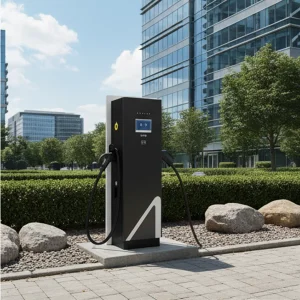
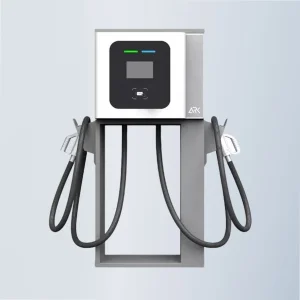
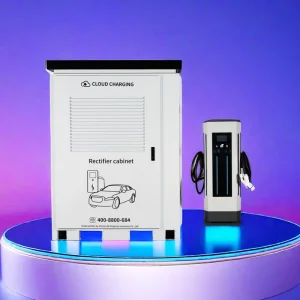
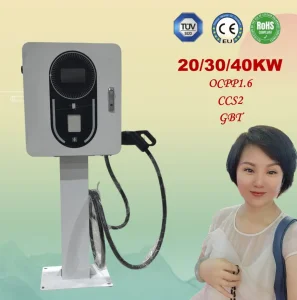
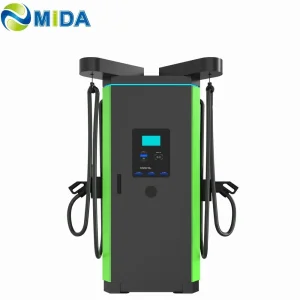
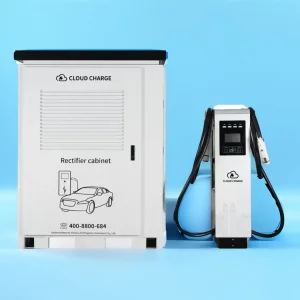
Our DC Fast Chargers (see list) provide high-power replenishment for long-range stops. Inductive charging is designed for convenience, automation, and frequent, shorter topping-up intervals.
Q: Can Shenzhen Orange Energy customize these solutions?
Yes. As an OEM manufacturer, we specialize in tailoring the charging hardware to specific voltage requirements, output capacities, and physical installation environments.
 Orange Energy