 Orange Energy
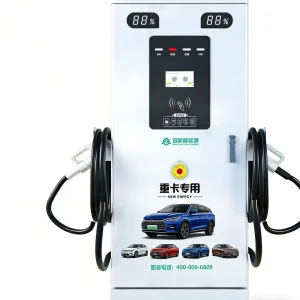
Engineered to handle extreme Midwest temperatures and high capacity urban demands.
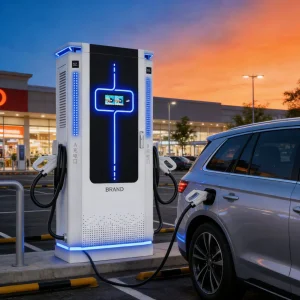
As the historic "Motor City," Detroit, Michigan, is positioned at the epicenter of North America's transition to smart electric mobility. Modern industrial facilities, logistics corridors, and downtown redevelopment zones are shifting rapidly toward sustainable charging architectures. State-backed programs, such as those guided by the Michigan Office of Future Mobility and Electrification, are allocating significant funds to reinforce the local network grid, prioritizing high-efficiency public networks and heavy-duty fleet solutions.
Deploying urban electric vehicle (EV) networks in Detroit poses distinct environmental and infrastructural challenges. Charging equipment must endure extreme seasonal temperature shifts, ranging from sub-zero winter freeze conditions to humid summers. Our product line mitigates these challenges through intelligent thermal management, ruggedized enclosures, and adaptive grid interface capabilities tailored to local public utilities like DTE Energy.
The city's commercial and public transit electrification strategies necessitate grid resilience and scalable charging technologies. High-density urban corridors demand chargers featuring:
Global EV Infrastructure Innovators & Manufacturing Pioneers
Shenzhen Orange Energy Co., Ltd. is a forward-thinking technology company specializing in electric vehicle charging infrastructure and smart energy solutions. Based in Shenzhen, the company focuses on the development, manufacturing, and deployment of advanced EV charging systems for global markets.
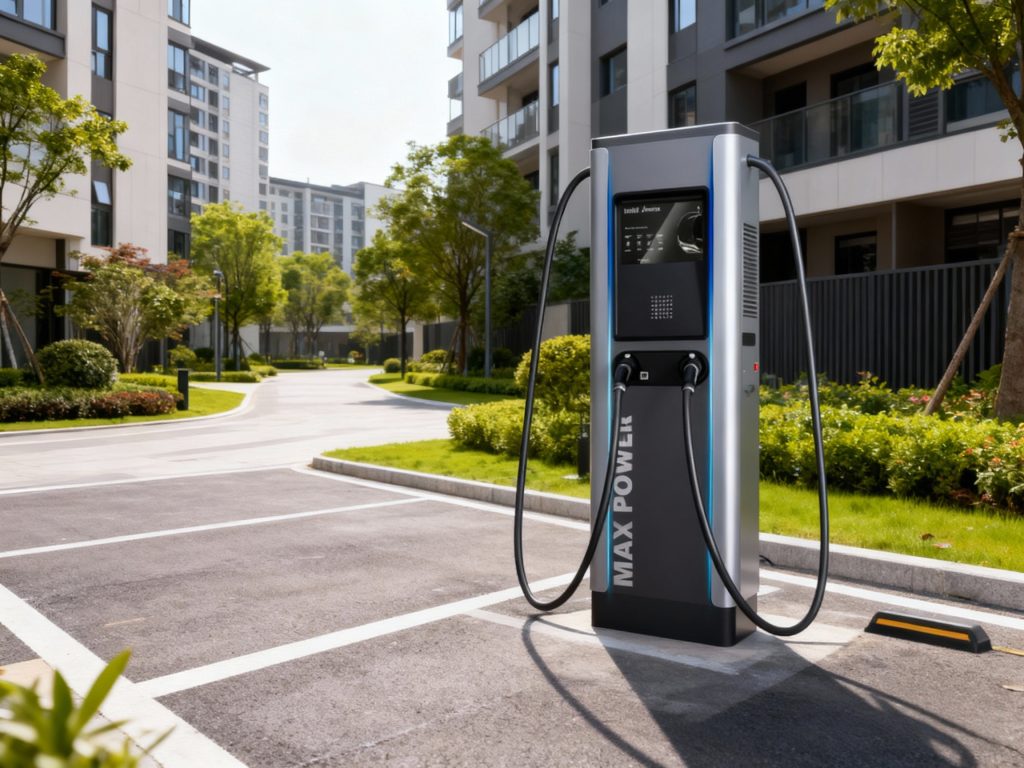
Orange Energy provides a comprehensive portfolio of charging solutions, including workplace EV charging, public charging infrastructure, residential charging solutions, and fleet charging systems. The company also develops fast-charging stations, urban charging networks, and highway charging stations to support the growing adoption of electric mobility.
In addition, Orange Energy delivers specialized applications such as retail parking charging, hotel destination charging, shopping mall and office building charging solutions, and multi-unit residential charging systems. Its innovative offerings also include advertising display charging stations, digital screen chargers, interactive charging displays, solar-powered EV charging systems, and networked charging management platforms.
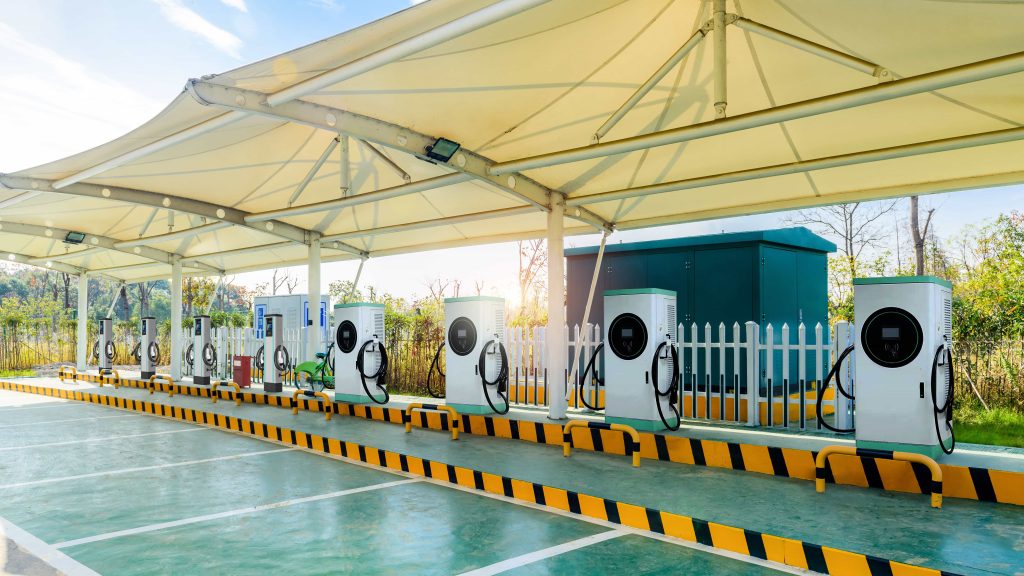
With a strong focus on smart technology, reliability, and sustainability, Shenzhen Orange Energy Co., Ltd. aims to help cities, businesses, and communities build efficient EV charging ecosystems worldwide.
How we export scalable, intelligent urban charging infrastructure configurations globally.
Leverage cloud-based resource scaling to optimize local power draw. Distribute energy across 30+ network nodes dynamically without over-stressing existing downtown substation feeds.
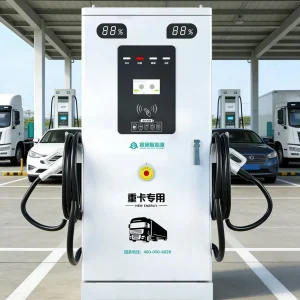
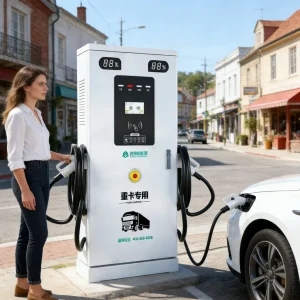
Designed for public bus networks and logistic fleets. Features low-noise operation, high efficiency conversion topologies (up to 96%), and liquid-cooled CCS1/CCS2 configurations.
Housed in double-layer galvanized steel or marine-grade aluminum, NEMA 3R and IP55 rated. Fully integrated with auto-fire extinguishing capabilities and lightning surge prevention circuits.
As a leading global exporter of commercial EVSE, Shenzhen Orange Energy ensures that all products shipping to Michigan are strictly configured to meet the electrical, environmental, and communications protocols of the United States. We integrate high-grade components that carry national laboratory markings, offering local code inspectors and project managers complete peace of mind.
Furthermore, our backend system supports seamless API integrations with North America's leading Charge Point Operators (CPOs). Through local localized support networks, remote diagnostic capabilities, and module-level plug-and-play components, downtime is reduced by up to 85% compared to legacy architectures.
Deploying tailored power solutions across diverse geographical and commercial locations.
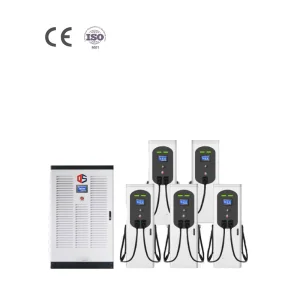
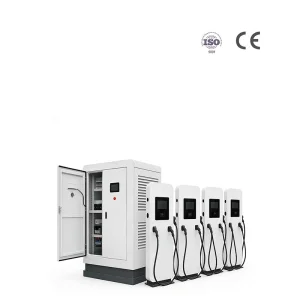
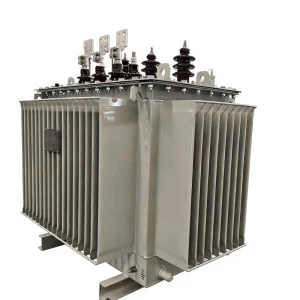
Located near crucial corridors like Interstate 94 and Detroit Metropolitan Airport (DTW), logistics centers need high-throughput charging. Our 240kW to 400kW DC fast charging systems, supported by our 35kv oil-immersed substation transformers, deliver sequential charging profiles that minimize charge duration for commercial freight vans, delivery trucks, and electric public buses.
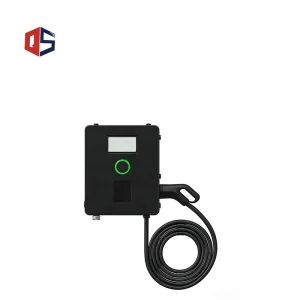
Urban real estate in downtown Detroit benefits from space-saving tower configurations. Integrating compact modular chargers allows real estate operators to optimize restricted spaces inside parking garages. Using smart payment integration and advertising screens, site hosts can offset grid operational costs through local ad placement.
Automotive campuses in Dearborn, Warren, and Auburn Hills require workplace EV infrastructure that seamlessly integrates with enterprise energy monitoring networks. Our dual-port smart chargers enable automated load balancing, aligning with corporate ESG metrics and reducing utility demand charges during peak daytime operational shifts.
Our research and engineering labs integrate winter-resilient modifications tailored for cold climates like Detroit:
Pioneering future-proof technologies to lead next-generation vehicle architectures.
As electric vehicles transition from power consumers to active energy resources, our network designs incorporate hardware modules for vehicle-to-grid (V2G) applications, supporting utility load balancing during high demand periods.
Our long-term engineering vision centers around seamless grid integration, local solar-battery storage combinations, and decentralized software networks. We are currently testing solid-state battery charge configurations and next-generation liquid-cooled cabling modules to prepare our networks for high-power demands.
Through our dedicated R&D facilities, we refine dynamic power routing systems, enabling multi-cable power dispensers to route electrical output based on real-time vehicle battery state-of-charge (SoC). This optimization maximizes throughput and extends the lifecycle of local grid equipment.
Providing direct answers regarding grid integration, export logistics, and local US standard compatibility.
Our chargers are designed with intelligent internal heating chambers, dynamic thermal cooling cycles, and high-performance insulation. This ensures continuous power delivery and interface responsiveness down to -40°F.
Yes, our hardware configurations align with standard IEEE and NEC requirements. We configure our stations to meet North American grid metrics, supporting local utility approval and seamless connection procedures.
We fully support OCPP 1.6J JSON, upgradeable to OCPP 2.0.1, enabling operators to choose their preferred back-end software and payment processing services without proprietary limitations.
Standard equipment is shipped within 6 to 8 weeks, while custom high-power transformer and charger configurations average 10 to 12 weeks, depending on final specifications.
Our hardware is backed by standard warranties, with replacement modules and localized field partner dispatch available to minimize downtime across the Midwest.
Industrial components, smart chargers, and integration units built for long-term operations.
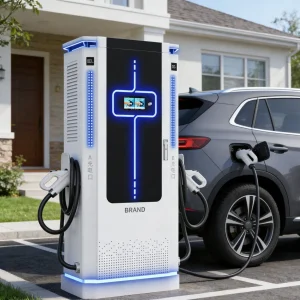
Connect with our expert engineering team for customized configurations, technical specifications, and bulk pricing details.
Send Inquiry Now